
Content creators who have nailed their visual production often struggle when it comes to audio. Custom soundtracks either require licensing fees or take hours to source from stock libraries. AI music generators have changed that equation. This guide covers the six strongest options in 2026, with notes on pricing, licensing, and the specific use cases each tool handles best. Pair these tools with a capable AI image generator for thumbnails and visual assets to complete the production stack.
The six tools below span the full range of creator needs from full-song vocal generation to royalty-free instrumentals to beginner distribution. If you also need visuals, see our AI image editor and photo tool comparisons for the visual side of your workflow.
Quick picks:
- Best for complete songs with vocals: Suno
- Best for precise clip-by-clip editing: Udio
- Best for royalty-free instrumentals: Soundraw
- Best for cinematic and orchestral scores: AIVA
- Best for ambient and background music: Mubert
- Best for beginners with zero music experience: Boomy
1. Suno
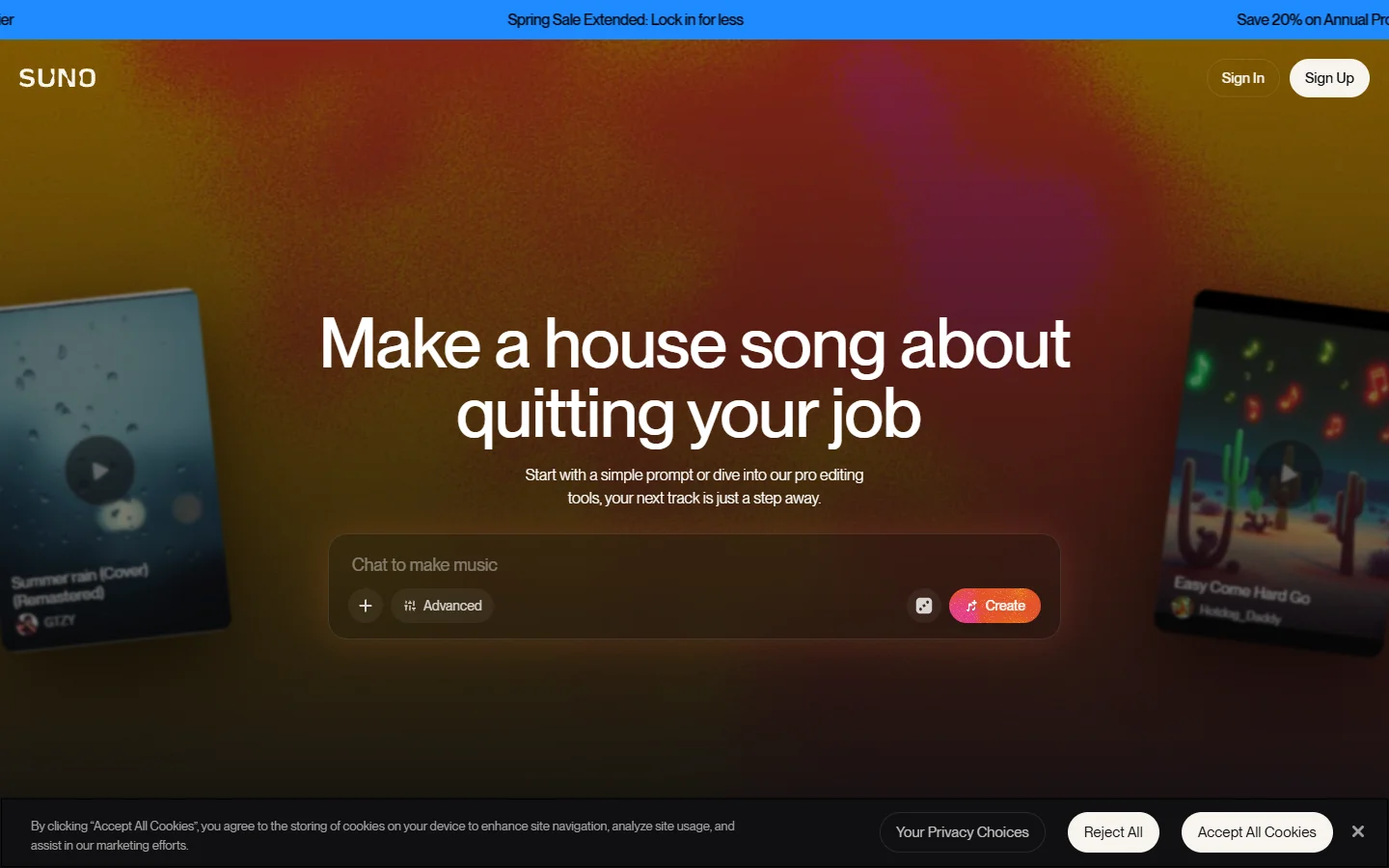
Suno generates complete songs with lyrics, melody, instrumentation, and natural-sounding vocals from a single text prompt. Generation takes 20 to 40 seconds per track and spans a wide range of genres from lo-fi hip-hop to film scoring. The free plan provides 50 credits per day, roughly 10 full songs, enough to test before committing. Commercial use requires the Pro plan at $10 per month. This tiered access model mirrors how premium AI models like FLUX 1.1 Pro gate quality and commercial rights behind paid subscriptions.
The main limitation on free accounts is the lack of stem export. You cannot isolate vocals or instruments for post-production without a paid plan, which restricts how much you can customize a track after generation. For creators doing text-to-video production who need music that matches specific edit cuts, Suno’s full-song approach trades precision for speed.
2. Udio
Udio was built by researchers who previously worked at Google DeepMind. Rather than generating full songs in one pass, it produces 30-second clips that you can extend, remix, or regenerate in sections. The Inpainting feature lets you select a specific part of a track and regenerate just that section without affecting the rest. If you use a FLUX prompt generator for image work, the iterative refinement workflow Udio applies to audio will feel familiar.
Audio quality reaches 48 kHz on paid plans, sufficient for professional distribution. The Standard plan at $10 per month adds commercial rights and removes the watermark on downloads. Udio’s clip-based workflow suits creators who want precise control over each section of a composition rather than accepting a complete song as-is.
3. Soundraw

Soundraw focuses entirely on instrumental music for commercial use. You select mood, genre, tempo, and duration, and the AI generates a track with individually editable sections: intro, verse, chorus, outro. Each section can be rearranged or removed independently, which lets you trim a three-minute track to fit a 45-second Instagram Reel without awkward cuts. Creators who use dedicated Midjourney alternatives for specific visual styles often find the same principle applies here: specialized tools produce cleaner output than general-purpose ones.
Every track on a paid plan includes a perpetual, worldwide commercial license that stays valid even if you cancel your subscription. The Creator plan starts at $16.99 per month. Soundraw does not generate vocals, which removes copyright complications for creators publishing across multiple platforms. Pair these tracks with AI-generated visuals for a legally clear, consistent content workflow.
4. AIVA
AIVA specializes in orchestral, cinematic, and film-scoring compositions. Originally trained on classical works, it now covers 250+ style presets spanning jazz, rock, electronic, and ambient genres. Tracks can run up to 10 minutes. AIVA’s style depth is comparable to what Recraft v3 offers for image generation: a broad preset library covering professional and niche creative use cases.
The MIDI export feature is the main differentiator. Downloading a composition as a MIDI file means you can open it in any DAW, modify individual instruments, and adjust timing with full control. The free plan allows three non-commercial downloads per month. The Pro plan at EUR 49 per month adds copyright ownership and unlimited downloads. Documentarians, game developers, and long-form YouTube creators who also use AI video tools will find AIVA’s orchestral output matches their production quality requirements.
5. Mubert
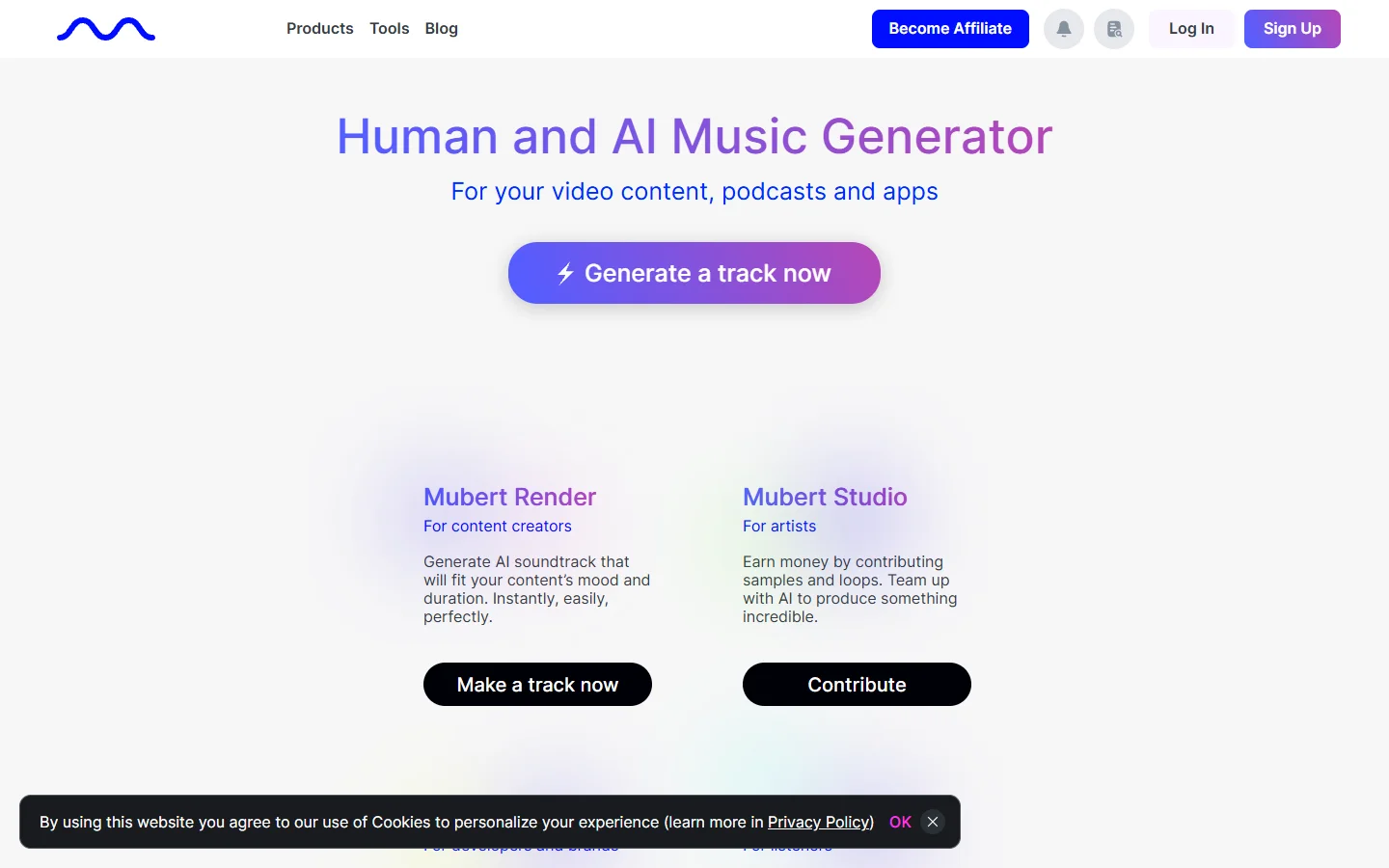
Mubert generates ambient, lo-fi, and background music from text prompts. You describe a mood (“calm electronic with soft piano, 90 BPM”) and Mubert produces a continuous track at your specified duration. The output stays unobtrusive, designed to sit under spoken content rather than compete with it. It pairs well with free online video makers for creators building lightweight content production setups.
The Ambassador plan is free and includes 25 tracks per month with attribution required. The Creator plan at $14 per month removes the attribution requirement and adds a commercial license. Mubert also provides an API for developers who want to integrate generation into their own apps, useful for teams running automated content workflows similar to programmatic video production pipelines.
6. Boomy

Boomy targets creators with no music production background. You select a style (electronic, lo-fi, global, rap), click create, and receive a full track in under 30 seconds. Editing options are minimal: tempo, mood, and section adjustments only. No raw MIDI or advanced mixing controls. Boomy’s simplicity parallels entry-level AI photo generators that offer one-click generation without post-processing controls.
The standout feature is the built-in distribution pipeline. You can submit songs directly to Spotify, Apple Music, and TikTok through the app, keeping 80% of streaming royalties. The free plan allows unlimited creation with limited distribution releases. The Premium plan at $9.99 per month adds unlimited releases. For creators building a passive catalog alongside their main content, Boomy complements free AI video generators as part of a low-cost production stack.

Comparison Table
| Tool | Best For | Free Tier | Paid From | Commercial Rights | Vocals | MIDI |
|---|---|---|---|---|---|---|
| Suno | Full songs with vocals | 50 credits/day | $10/month | Paid plan | Yes | Pro only |
| Udio | Precise clip editing | 100 credits/month | $10/month | Standard plan | Yes | No |
| Soundraw | Royalty-free instrumentals | 14-day trial | $16.99/month | All paid plans | No | No |
| AIVA | Cinematic scores | 3 downloads/month | EUR 11/month | Pro plan | No | Yes |
| Mubert | Background and ambient | 25 tracks/month | $14/month | Creator plan | No | No |
| Boomy | Beginners | Unlimited creation | $9.99/month | Premium plan | Limited | No |
How to Choose the Right Tool
The right choice depends on your content type and post-production requirements. For short-form social content, Soundraw’s phrase-level editor lets you trim tracks to exact lengths with clean commercial licensing. For podcasts and livestreams, Mubert’s unobtrusive output is the practical default. For YouTube videos that need full original songs, Suno generates complete vocal tracks faster than any other option here. For narration, the best AI text-to-speech tools cover the voiceover side of the workflow alongside these music generators.
Creators building a personal brand need consistent audio and visual production. The same discipline that applies to professional AI headshots applies to audio: using quality tools rather than the cheapest option means the right tool for your specific content format saves more time than the free option that requires significant post-processing.
FAQ
What is the best free AI music generator in 2026?
Suno offers the most generous free tier with 50 daily credits, roughly 10 complete songs per day. Boomy provides unlimited free creation, though streaming distribution requires a paid plan. Test both before committing; FLUX Realtime follows the same model in image generation, where free-tier access gives you enough to evaluate quality before upgrading.
Can I use AI-generated music commercially without paying?
Generally no. Suno, Udio, Soundraw, and Mubert all restrict commercial use to paid tiers. Always check the specific license terms before publishing, particularly for YouTube monetized content or brand campaigns where licensing clarity is essential.
Do AI music generators produce royalty-free music?
Soundraw provides the clearest answer: every paid-plan track comes with a perpetual commercial license that stays valid after cancellation. This mirrors how background remover tools handle perpetual licensing for removed backgrounds: pay once, keep the rights.
Which tool is best for YouTube creators?
Suno and Soundraw are the most practical choices. Suno generates vocal tracks quickly for intros and branded content. Soundraw produces instrumentals with guaranteed commercial licensing that covers YouTube monetization. Avoid free-tier tracks from any platform when publishing monetized content.
How long does AI music generation take?
Most tools generate a track in 20 to 60 seconds. Suno averages 20 to 40 seconds for a full song. Udio generates 30-second clips that require multiple passes to build a full-length track. AI photo background tools process in a similar 10 to 40 second range, reflecting the common latency pattern across AI creative tools.
Can I edit AI-generated music in a DAW?
AIVA is the only tool that exports MIDI files, giving you full control over instrumentation and timing in any DAW. Suno offers stem export on Pro and higher plans. Other tools export final audio files only.
Are AI music generators good enough for professional content?
Soundraw and AIVA produce output that regularly appears in professional commercial video work. Suno and Udio are competitive for social and YouTube content. The limitation is fine control: AI-generated tracks require less production skill but offer less creative specificity than commissioned music. FLUX Krea produces similar results in image generation: usable to exhibition-quality output depending on how much iterative refinement you apply.
Conclusion
The AI music generation landscape in 2026 offers clear enough tradeoffs that tool selection comes down to one question: do you need vocals or not? Suno leads the vocal space for speed and accessibility. Soundraw is the safest choice for instrumental content needing legal clarity. AIVA stands alone for cinematic and orchestral work. Mubert and Boomy fill the background and beginner niches. Udio is the precision option for granular clip-level control. Start with the free tiers to test output quality against your content style, then commit to whichever paid plan matches your publishing volume.