
AI-generated visuals only tell half the story. The other half is voice. Whether you are narrating an AI-generated short film, adding voiceover to product demos, or localizing video content across languages, text to speech tools have become essential to the modern AI image and video creation pipeline. This guide compares five of the strongest AI text to speech platforms available in 2026, covering voice quality, latency, cloning, pricing, and real-world use cases.
The tools covered here are ElevenLabs, Cartesia, Fish Audio, Murf AI, and Amazon Polly. Each takes a different approach to voice synthesis, and the right choice depends on whether you prioritize studio-grade narration, real-time speed, cloning accuracy, ease of use, or infrastructure scale. We tested each tool with the same set of scripts across conversational, formal, and multilingual prompts to keep the comparison fair.
ElevenLabs: Studio-Grade Narration Quality
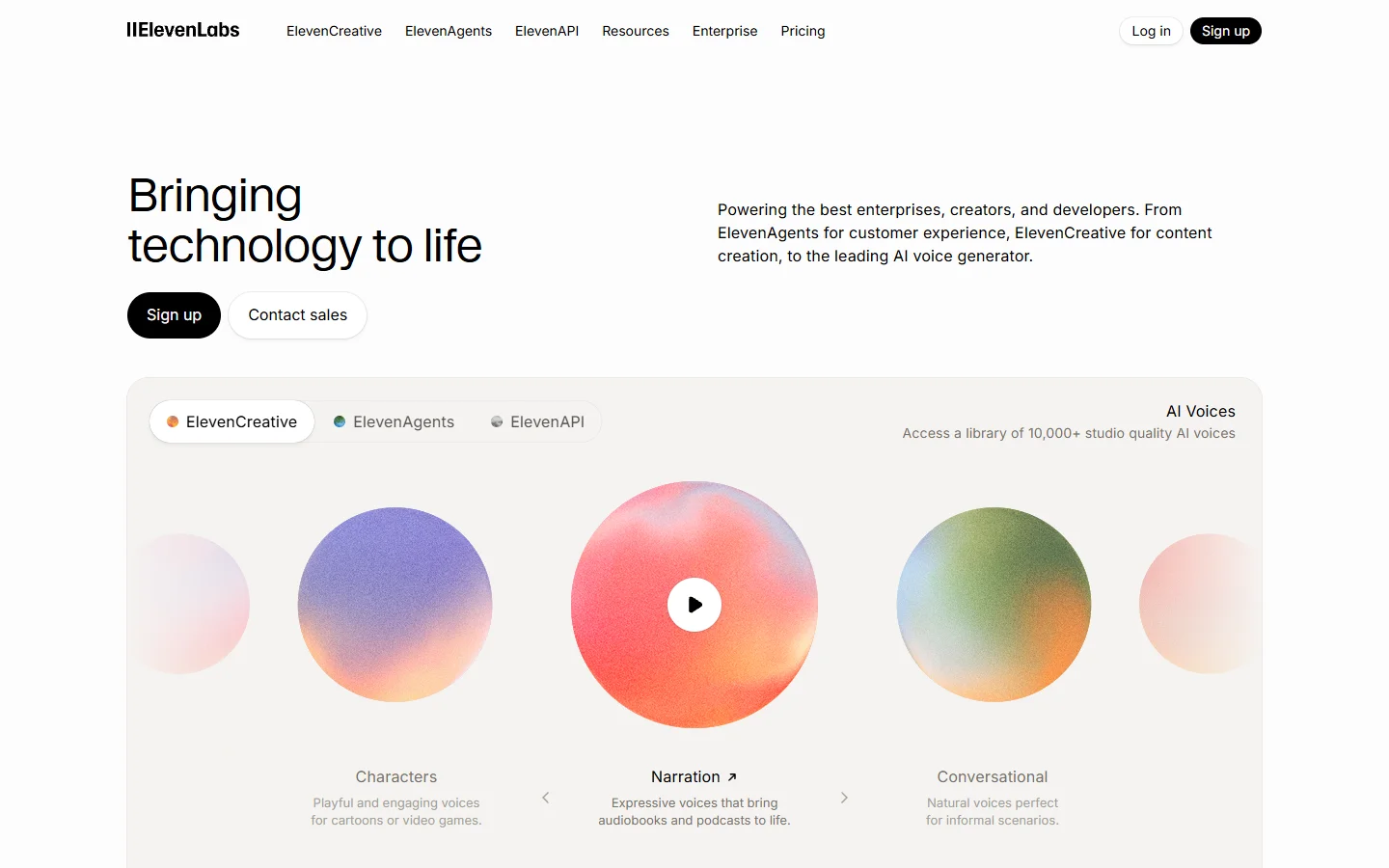
ElevenLabs has established itself as the default choice for creators who need broadcast-quality speech output. Their Eleven v3 model supports 74 languages and produces voices with natural pacing, breath sounds, and emotional inflection that consistently outperform competitors in blind listening tests.
Voice cloning requires only a few seconds of source audio and retains the speaker’s cadence and tonal qualities with high fidelity. The Projects feature allows multi-speaker management for long-form content, useful for creators who also work with AI prompt engineering and need to coordinate visual and audio assets.
For teams producing serialized audio or pairing voiceover with AI-generated imagery, this workflow management alone justifies the premium pricing.
- Strength: Best narration quality with deep emotional range
- Weakness: Higher per-character cost than most alternatives
- Best for: Audiobook production, podcast narration, video voiceovers
- Pricing: Free tier available; Pro starts at $22/month for 100,000 characters
The main tradeoff is cost. At roughly $0.30 per 1,000 characters on the Pro plan, ElevenLabs is significantly more expensive than Fish Audio or Amazon Polly for high-volume workloads. Teams already using AI image generation tools often find the per-character pricing adds up fast when pairing visuals with narration.
Cartesia Sonic 3: Lowest Latency for Real-Time Use
If your workflow demands real-time voice interaction, Cartesia is the standout. Their Sonic 3 model delivers approximately 90ms time-to-first-audio, making it the fastest option tested. That speed transforms voice agents from turn-based exchanges into genuinely responsive conversations.
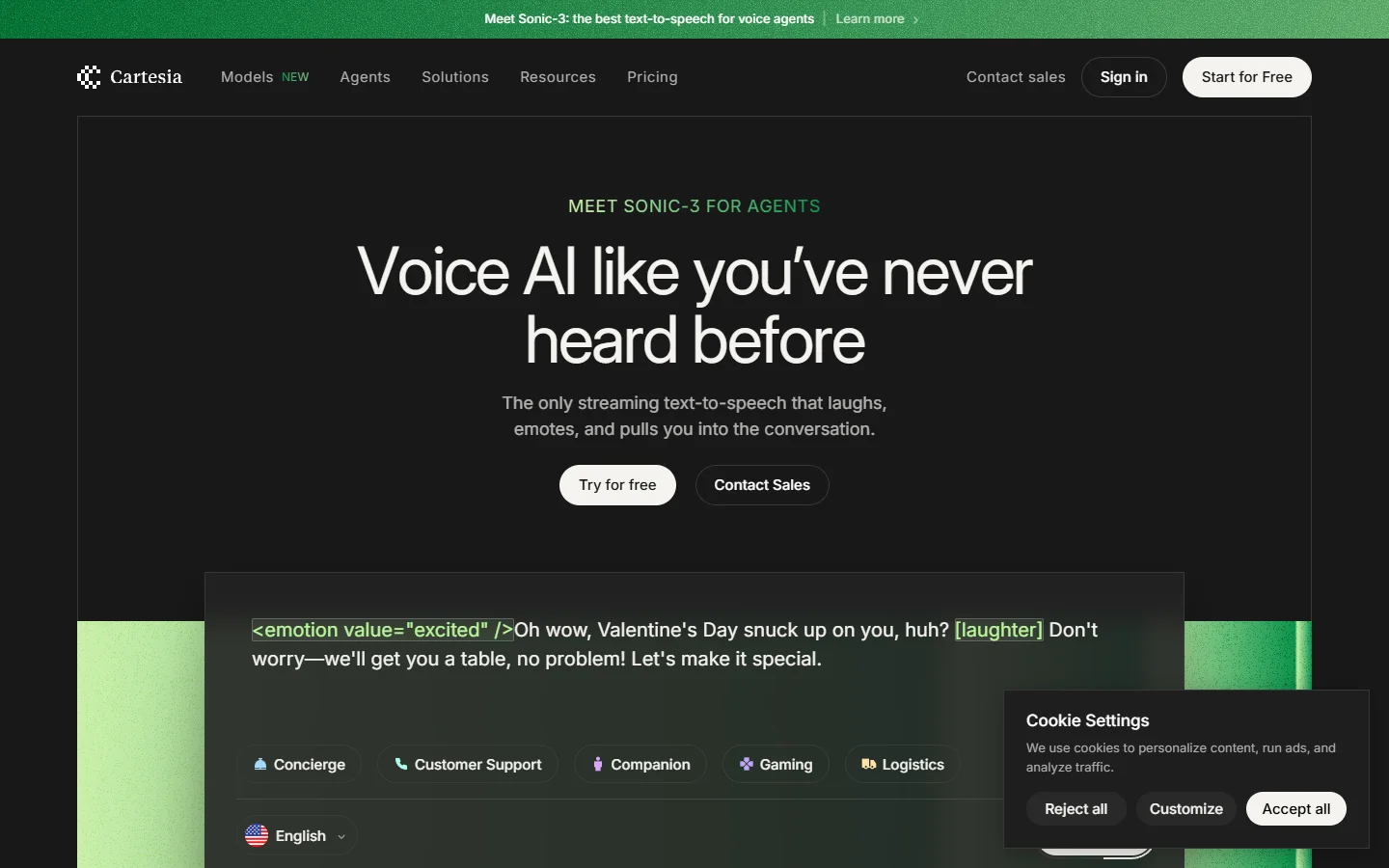
The API supports streaming out of the box with straightforward integration. Custom voice training produces solid results from short audio samples, though the pre-built voice library is smaller than what ElevenLabs offers. If you are building real-time avatar experiences or interactive demos that combine AI-generated visuals with speech, the sub-100ms latency pairs well with lip-sync rendering pipelines.
- Strength: Fastest time-to-first-audio among tested tools
- Weakness: Smaller pre-built voice library
- Best for: Conversational AI agents, customer service bots, live demos
- Pricing: Usage-based; starts around $5/million characters
For voice agent developers specifically, Cartesia’s combination of speed and reasonable pricing makes it hard to ignore. The latency gap between Cartesia and the next fastest tool (Fish Audio at roughly 150ms) is noticeable in interactive contexts where real-time visual generation runs alongside speech output.
Fish Audio: Best Voice Cloning Value
Fish Audio’s S2 model has quietly risen to the top of independent voice cloning benchmarks. It clones voices from a 15-second sample across 80+ languages, with granular controls for emotion, pacing, and emphasis that go beyond what most competitors offer. Creators who pair speech output with visual content from platforms like wireflow.ai can build complete multimedia workflows without switching between multiple tools.
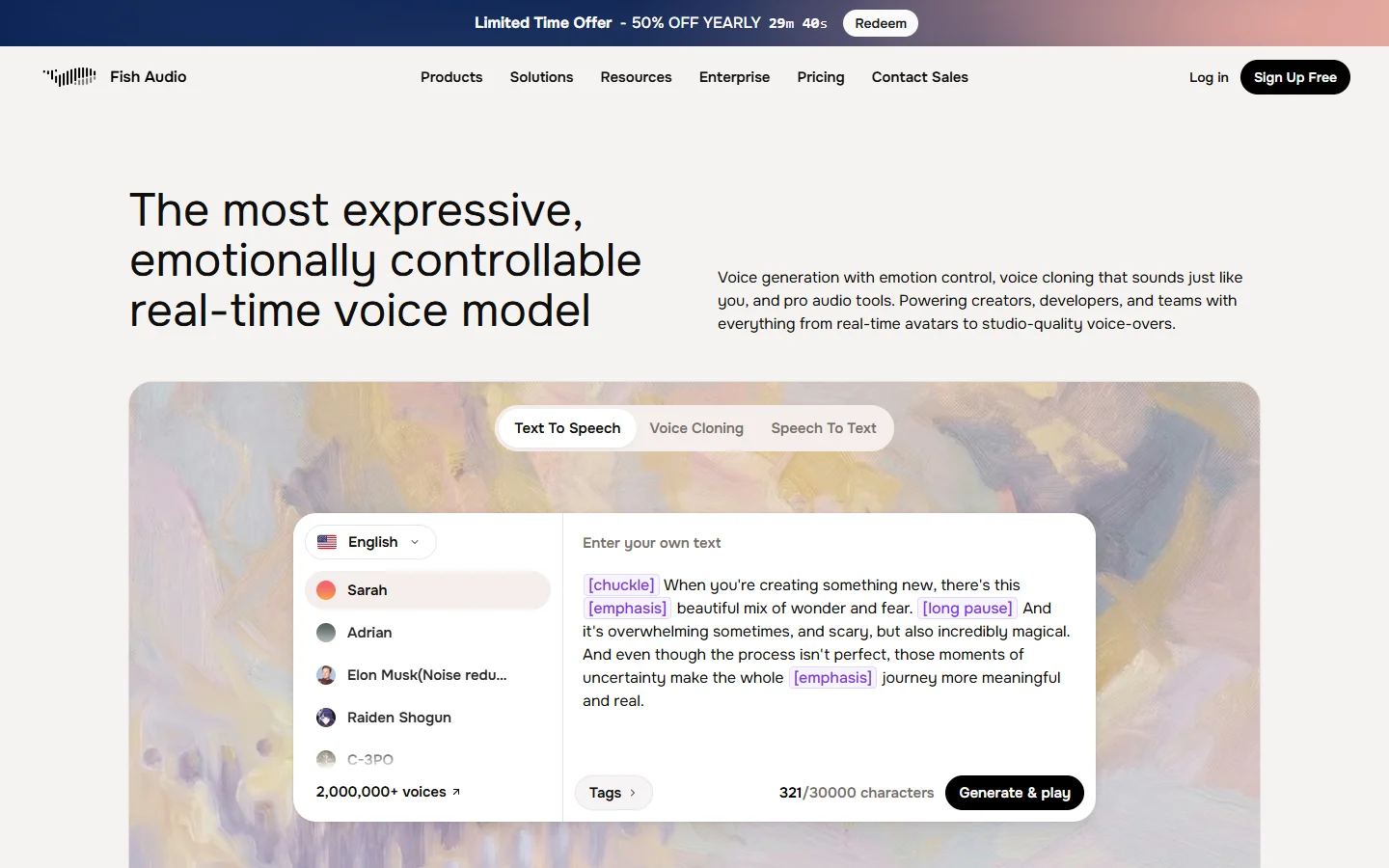
Pricing starts around $15 per million characters, roughly ten times cheaper than ElevenLabs for equivalent output quality. For teams processing large volumes of text across multilingual creative projects, the cost savings compound quickly.
- Strength: Top-ranked voice cloning fidelity at a fraction of the cost
- Weakness: Smaller brand presence and fewer community resources
- Best for: Multilingual content localization, high-volume narration
- Pricing: ~$15/million characters; free tier with limited usage
The tradeoff is ecosystem maturity. ElevenLabs has more tutorials, community presets, and third-party integrations. But if raw cloning quality and price per character are your primary criteria, Fish Audio is currently the strongest option available for creators working across AI-powered content workflows.
Murf AI: Most Accessible for Non-Technical Users
Murf AI focuses on making voice generation approachable for teams without engineering resources. The browser-based editor lets you type or paste text, pick a voice, adjust tone sliders, and export audio without touching an API. For marketing teams producing visual content with AI tools and needing quick voiceover, this simplicity is the core selling point.
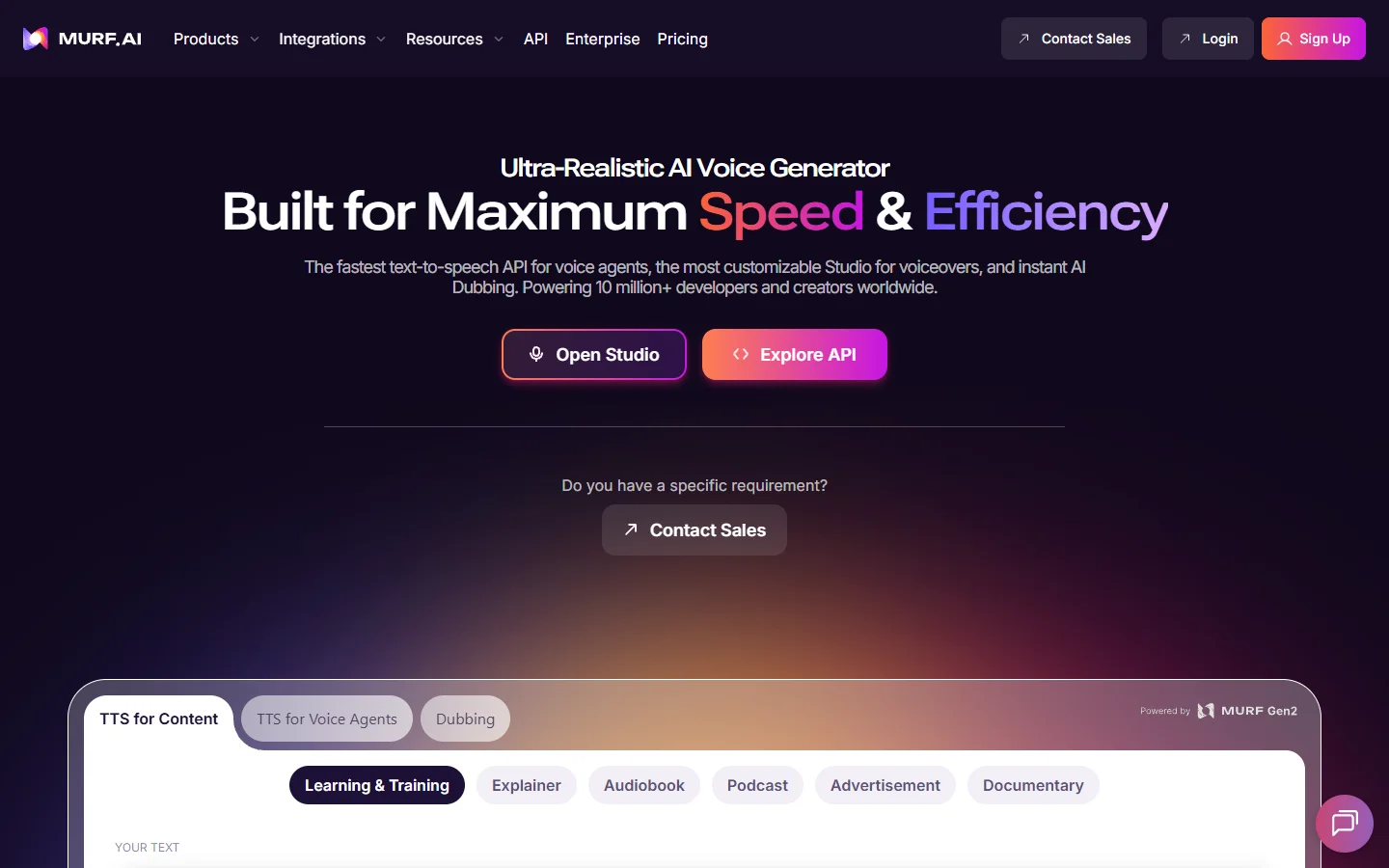
The voice library includes over 200 options across 20+ languages, with enterprise-grade features like team workspaces and brand voice consistency settings. Output quality sits in the middle of the pack: natural enough for marketing videos and training content, but noticeably less expressive than ElevenLabs for long-form narration.
- Strength: Best no-code interface for non-technical users
- Weakness: Voice quality lags behind ElevenLabs and Fish Audio for expressive narration
- Best for: Marketing teams, corporate training, quick social media voiceover
- Pricing: Free trial; Creator plan starts at $26/month
Amazon Polly: Enterprise Infrastructure at Scale
Amazon Polly is the infrastructure play. It runs inside AWS, integrates directly with S3, Lambda, and other AWS services, and offers SSML markup for precise control over pronunciation, pauses, and emphasis. If your organization already operates on AWS and needs to generate content at scale, Polly slots in without adding a new vendor.
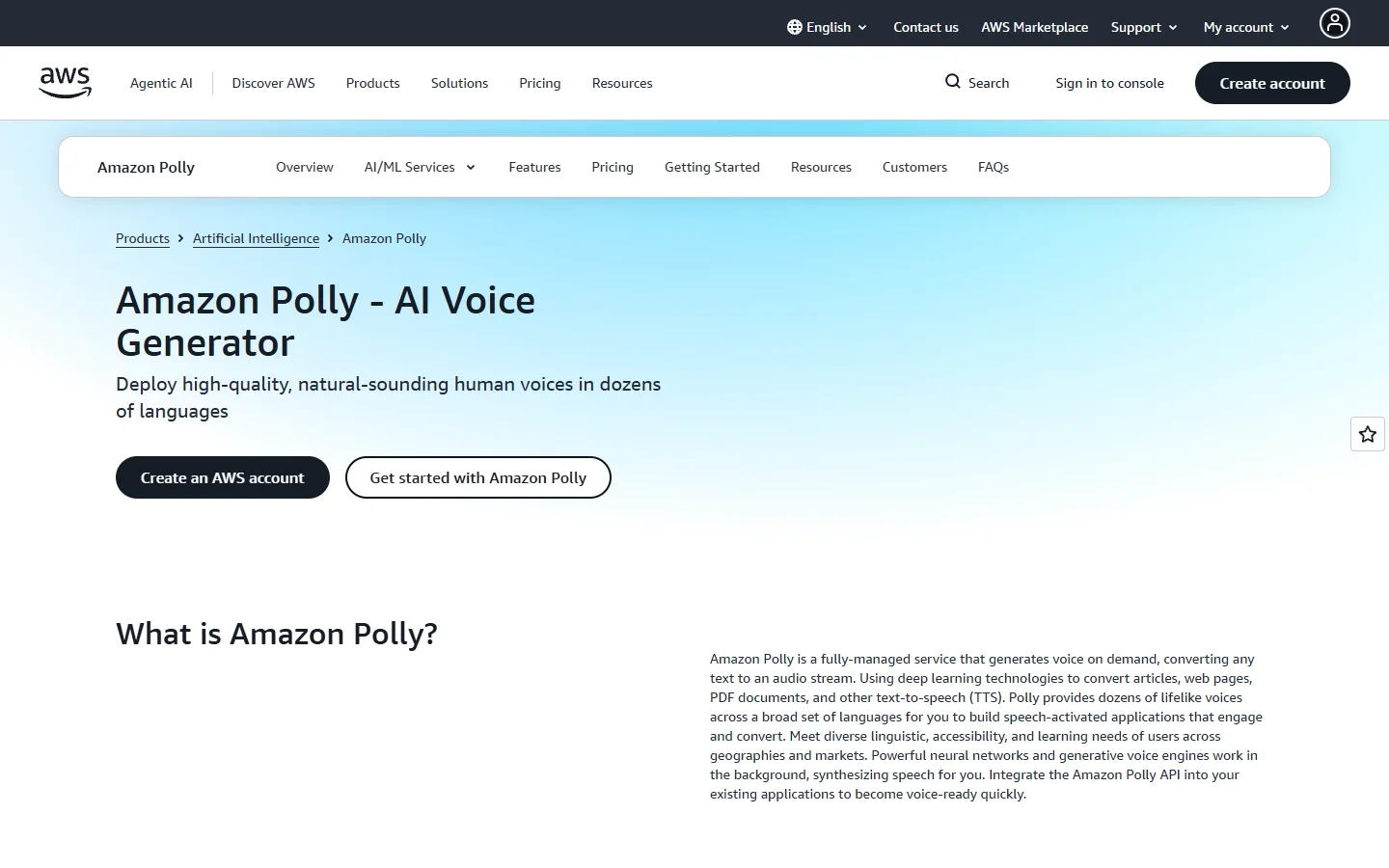
The Neural engine produces significantly better output than the older Standard engine, though both are available. Pricing is among the lowest tested at $4 per million characters for Neural voices, with a generous free tier of 5 million characters per month for the first year. For organizations already running AI generation pipelines on cloud infrastructure, Polly integrates without friction.
- Strength: Deep AWS integration, lowest cost at scale
- Weakness: Voice naturalness trails dedicated TTS platforms
- Best for: Enterprise applications, IVR systems, AWS-native workflows
- Pricing: $4/million characters (Neural); free tier for 12 months
The tradeoff is voice quality. Polly’s Neural voices sound good for informational content but lack the emotional range and naturalness of ElevenLabs or Fish Audio. For customer-facing narration where warmth matters, especially when paired with high-quality AI visuals, dedicated TTS tools produce noticeably better results.
Comparison Table
| Feature | ElevenLabs | Cartesia | Fish Audio | Murf AI | Amazon Polly |
|---|---|---|---|---|---|
| Voice quality | Excellent | Very good | Excellent | Good | Good |
| Latency | ~200ms | ~90ms | ~150ms | ~300ms | ~180ms |
| Voice cloning | Yes (few seconds) | Yes (short sample) | Yes (15s sample) | Limited | No |
| Languages | 74 | 30+ | 80+ | 20+ | 30+ |
| Price per 1M chars | ~$300 | ~$5 | ~$15 | ~$130 | $4 |
| Best for | Studio narration | Real-time agents | Cloning + localization | Non-technical teams | Enterprise scale |
How to Choose the Right Tool
Start with your primary use case and match it to the tool that scores highest in your most important column from the table above. If you need the most natural-sounding narration for polished content, ElevenLabs remains the benchmark. If latency is the constraint, Cartesia is the clear winner. For high-volume multilingual work on a budget, Fish Audio delivers the best value. Non-technical teams will move fastest with Murf AI’s browser editor. And if you are already on AWS and need scalable voice generation as part of a larger content pipeline, Polly is the pragmatic choice. For a wider survey of options beyond these five, the AI text-to-speech directory catalogs newer entrants and reviews each platform as it launches.

Many creative teams now combine text-to-image generation with text-to-speech in unified production workflows. Generating visuals with AI and then narrating them with cloned or synthetic voices reduces production time from days to hours. The Wireflow platform supports this kind of end-to-end creative pipeline, connecting image generation steps with audio output in a single workflow.
Frequently Asked Questions
Which AI text to speech tool has the most natural-sounding voices?
ElevenLabs currently produces the most natural output, particularly for long-form narration. Their Eleven v3 model handles breath sounds, pacing, and emotional inflection better than any other tool tested. Fish Audio is a close second, especially for cloned voices.
What is the cheapest AI text to speech tool for high-volume use?
Amazon Polly at $4 per million characters (Neural) is the cheapest option at scale. Fish Audio at roughly $15 per million characters offers significantly better voice quality at a still-affordable price point. ElevenLabs is the most expensive at approximately $300 per million characters on Pro. For budget-conscious creators already investing in AI image generation, Fish Audio offers the best balance of quality and cost.
Can I clone my own voice with these tools?
ElevenLabs, Cartesia, and Fish Audio all support voice cloning. Fish Audio requires the least source audio (15 seconds) and produces the highest-rated clones in independent benchmarks. ElevenLabs requires a similar amount but offers more post-processing controls. Murf AI has limited cloning features, and Amazon Polly does not support voice cloning.
Which tool is best for real-time voice agents?
Cartesia Sonic 3, with approximately 90ms time-to-first-audio. No other tool tested comes close to that latency for interactive applications. ElevenLabs has a Turbo mode that reduces latency but still sits around 200ms. Real-time voice pairs well with real-time image models for live demo experiences.
Do these tools support multiple languages?
All five support multiple languages. Fish Audio leads with 80+ languages, followed by ElevenLabs at 74. Amazon Polly and Cartesia cover 30+ each, while Murf AI supports 20+. For multilingual voice cloning specifically, Fish Audio and ElevenLabs are the strongest options, which matters for teams localizing AI-generated visual content across markets.
Can I use AI text to speech for commercial projects?
Yes. All five tools offer commercial licenses on their paid plans. ElevenLabs, Fish Audio, and Murf AI explicitly allow commercial use of generated audio. Amazon Polly’s terms permit commercial use within AWS’s standard service terms. Always check the specific plan terms for your use case, especially if you are combining speech with commercially licensed AI imagery.
How do AI text to speech tools integrate with video production?
Most tools offer APIs that slot into automated content pipelines. ElevenLabs and Fish Audio provide SDKs for Python and Node.js. Cartesia’s streaming API is optimized for real-time integration. Murf AI offers a browser-based editor with direct video export. Amazon Polly integrates natively with AWS media services.
Conclusion
The AI text to speech market in 2026 is more segmented than ever. No single tool wins across every category, which is why the comparison matters more than a simple ranking. ElevenLabs dominates studio narration, Cartesia owns real-time speed, Fish Audio leads on cloning value, Murf AI makes voice generation accessible to everyone, and Amazon Polly scales cheaply on AWS infrastructure. Pick the tool that matches your primary constraint, whether that is quality, speed, cost, ease of use, or existing infrastructure, and test it against your actual content before committing. For a broader look at the AI creative toolkit, see our guide to AI image generation.