
Production AI image pipelines rarely involve a single model call. A typical workflow chains text-to-image generation, upscaling, background removal, and format conversion into a sequence that needs to run reliably at scale. That is where orchestration APIs come in. They coordinate multi-step pipelines so you can focus on creative output instead of infrastructure plumbing. If you are already generating images with tools like the FLUX model family, adding an orchestration layer is the next step toward production-grade automation.
This guide compares the top AI orchestration APIs for production image generation apps in 2026, covering architecture patterns, pricing, and practical deployment scenarios.
Why Image Generation Pipelines Need Orchestration
A single text-to-image call is straightforward. But production apps demand more: prompt preprocessing, model selection based on style requirements, parallel generation across multiple models, quality filtering, upscaling, and delivery to a CDN or client. Each step can fail independently, and manual glue code between them becomes brittle fast. Orchestration APIs solve this by providing structured pipeline definitions with built-in retry logic, state management, and monitoring.
They turn fragile scripts into repeatable, observable workflows that your team can debug and scale without rewriting integration code every time a provider changes their API. The platforms below represent the strongest options for building REST-based AI pipelines in 2026.
LangGraph
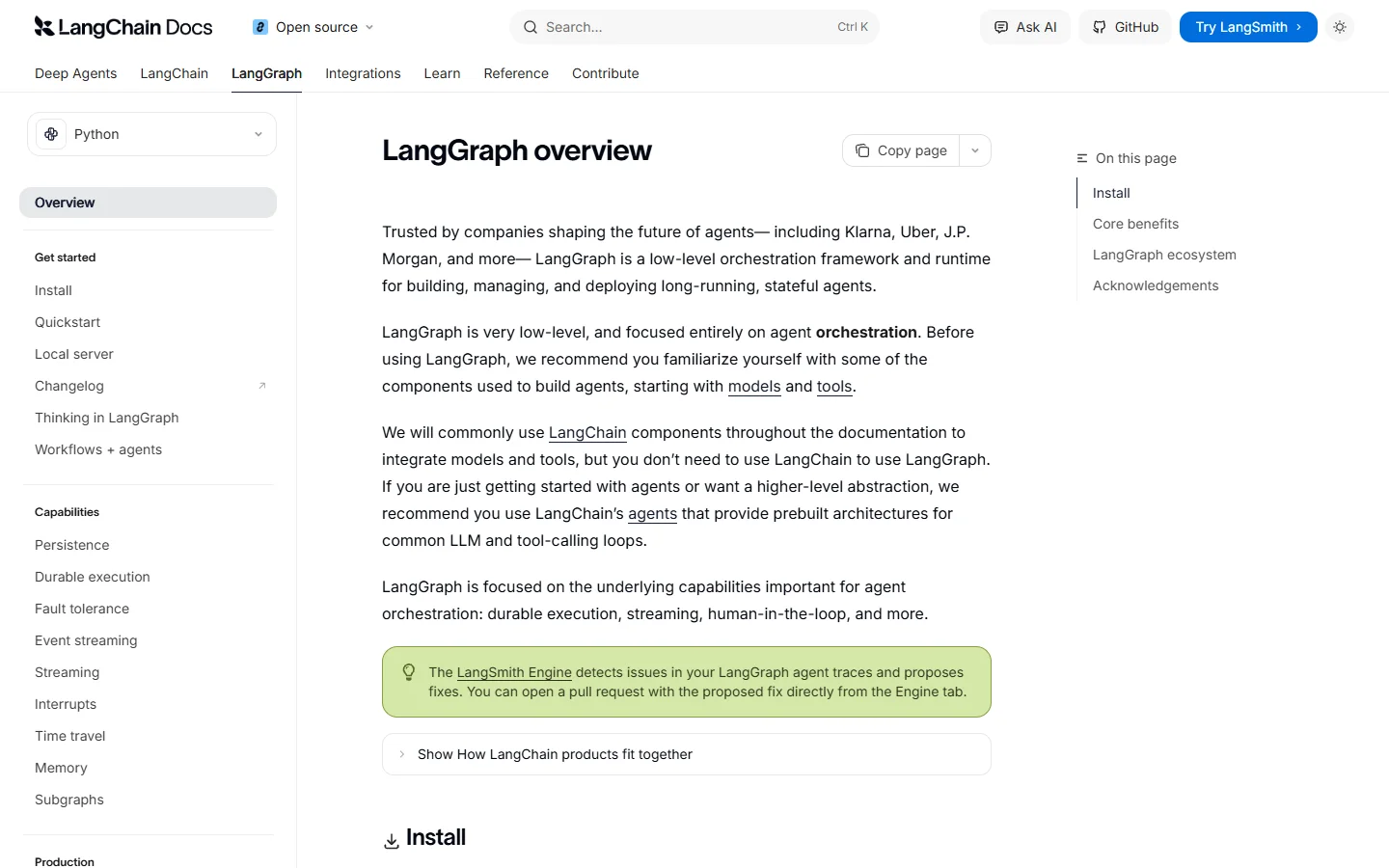
LangGraph is a graph-based orchestration framework from the LangChain team. It models workflows as directed graphs with nodes and edges, supporting cycles, branching, checkpointing, and human-in-the-loop patterns. For image generation pipelines, this means you can build a graph where one node calls FLUX 1.1 Pro, another runs quality assessment, and a conditional edge routes failures back to a retry node with adjusted parameters. If you are comparing content generation APIs and need something code-first, LangGraph gives maximum control.
The framework includes built-in persistence (state survives restarts), streaming support for long-running pipelines, and tight integration with LangSmith for observability. The tradeoff is complexity: defining graph structures and managing state schemas requires significant Python expertise, which is why some teams prefer no-code workflow builders instead. Pricing is open-source for the framework itself; LangSmith monitoring starts at $39/month per seat.
CrewAI
CrewAI takes a different approach by organizing orchestration around role-based agents. You define agents with specific responsibilities (a “prompt engineer” agent, a “quality reviewer” agent, a “style matcher” agent) and assign them tasks in a crew. The framework manages delegation and inter-agent communication automatically. For image generation workflows, this maps well to creative pipelines where different stages require different expertise: a researcher agent picks reference images, a prompt agent crafts the generation prompt, and a QA agent evaluates outputs against brand guidelines.
If you want a platform that combines visual orchestration with API access for this kind of pipeline, a multi-model AI workflow tool lets you compare the workflow-builder approach against CrewAI’s code-first model. Pricing is open-source for the core; CrewAI+ managed platform has usage-based pricing.
AWS Bedrock Agents
AWS Bedrock Agents is a fully managed service for building autonomous AI agents with API orchestration capabilities. It supports customizable action groups (API endpoints your agent can call), knowledge bases for RAG, and session management. The 2026 release added multi-agent collaboration, code interpretation, and guardrails integration. For teams already on AWS, the tight coupling with Lambda, S3, and DynamoDB reduces integration friction significantly. Image generation pipelines can trigger Bedrock to call external model APIs, store outputs in S3, and chain calls across services without custom infrastructure.
The downside is vendor lock-in and a relatively rigid agent definition structure. Complex orchestration patterns that need custom execution logic may feel constrained by the declarative configuration approach. For a broader perspective on managed service reliability, this review of automation in wellness businesses highlights similar orchestration patterns used outside the image generation space. Pricing is pay-per-use at $0.01-0.03 per agent invocation plus model costs.
Microsoft AutoGen
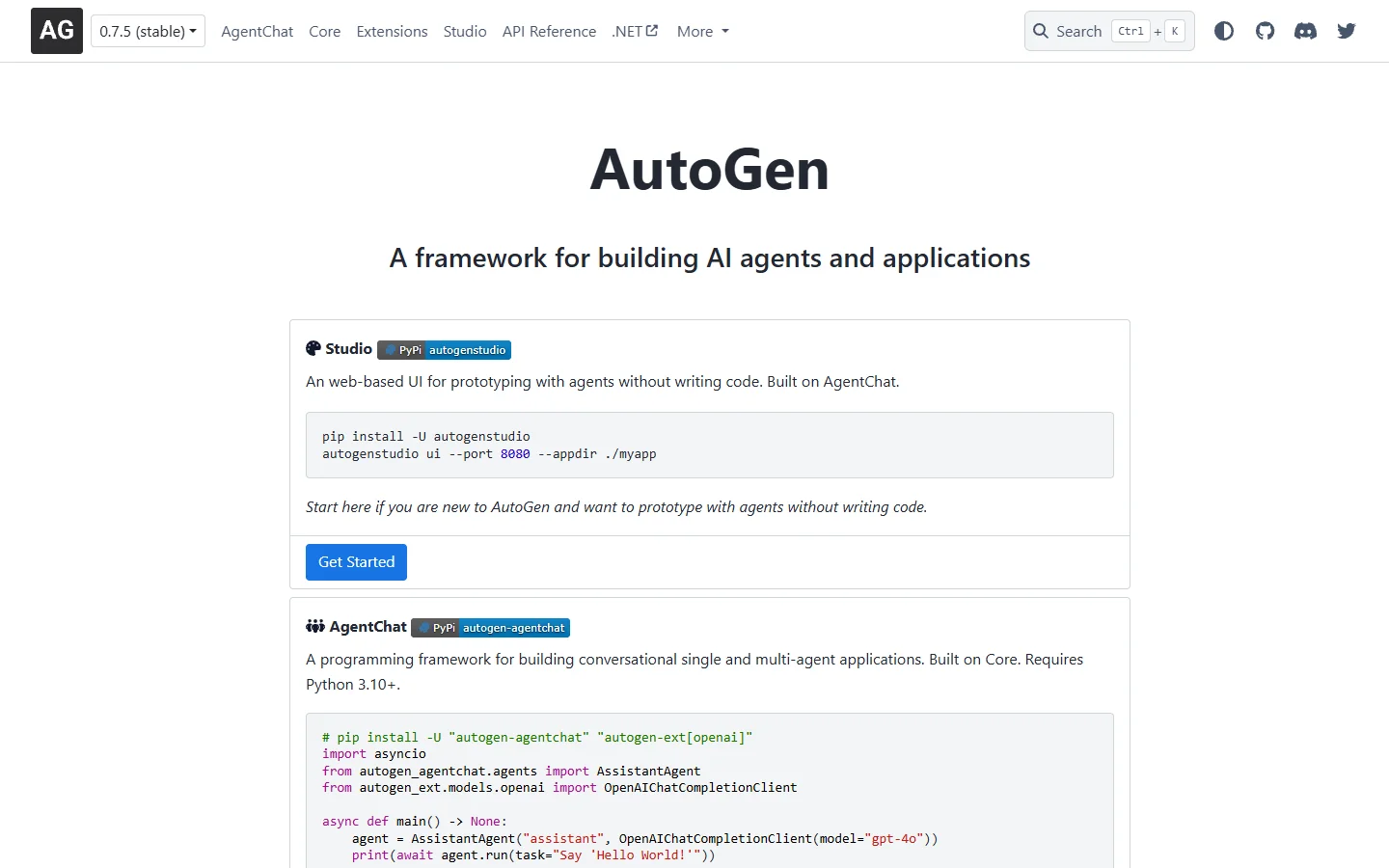
AutoGen is Microsoft’s framework for multi-agent AI systems where agents collaborate through structured conversation. The conversation-driven orchestration manages turn-taking, termination conditions, and group chat patterns. This is useful for iterative image generation workflows where a “creator” agent generates, a “critic” agent evaluates, and they go back and forth until quality thresholds are met. The framework integrates with Azure AI services but works with any LLM provider, making it flexible for teams that use multiple model vendors. AutoGen suits research-heavy applications where the problem benefits from multiple perspectives.
AutoGen is free and open-source, with Azure hosting costs applying for managed deployments. For simpler sequential pipelines, a direct workflow execution API handles the job with less overhead.
Agno
Agno is an open-source multi-agent framework in Python with a built-in production runtime called AgentOS. The integrated control plane manages execution, state, and observability for single agents, teams, and their interconnected workflows. What sets Agno apart is its focus on production readiness from the start: health checks, graceful shutdown, resource limits, and structured logging come built in. It pairs well with external image generation APIs when you need both agent autonomy and structured pipeline execution.
For teams wanting full control over their orchestration infrastructure without paying for managed services, Agno provides the most complete self-hosted option. You can see how it compares to other image editing platforms in practice. Pricing is free and open-source with self-hosted infrastructure costs only.
Apache Airflow
Apache Airflow was built for data pipeline orchestration but has become a solid choice for scheduled batch AI image processing. The DAG-based workflow definition, built-in scheduling, retry logic, and extensive operator ecosystem make it reliable for pipelines that run on cron schedules. AI image use cases include nightly batch generation jobs, periodic model evaluation runs, and bulk upscaling or format conversion across large asset libraries.
Airflow is not designed for real-time, interactive image generation. If your use case requires sub-second responses, pair it with a real-time orchestrator and use Airflow for the batch layer. The PythonOperator lets you call any image generation model directly. Pricing is free and open-source; managed options like Astronomer and MWAA start from $300/month.

Comparison Table
| Platform | Type | Real-time | Multi-agent | Self-hosted | Starting Price |
|---|---|---|---|---|---|
| LangGraph | Code framework | Yes | Yes | Yes | Free (OSS) |
| CrewAI | Code framework | Yes | Yes | Yes | Free + managed |
| AWS Bedrock | Managed service | Yes | Yes | No | Pay-per-use |
| AutoGen | Code framework | Yes | Yes | Yes | Free (OSS) |
| Agno | Code framework | Yes | Yes | Yes | Free (OSS) |
| Apache Airflow | Batch scheduler | No | No | Yes | Free (OSS) |
How to Pick the Right API for Your Image Pipeline
The right choice depends on three factors: your team’s technical depth, latency requirements, and existing infrastructure. If your team includes strong Python developers comfortable with graph abstractions, LangGraph or Agno give maximum flexibility. For AWS-native companies, Bedrock Agents minimizes integration overhead. For a broader look at AI photo generation, many of these orchestrators support FLUX, Midjourney, and DALL-E models out of the box.
If you need both a visual canvas for building pipelines and a programmable API for triggering them, check what headless workflow platforms offer in terms of combining UI building with API execution. For batch workloads that do not need real-time responses (bulk product photo generation, nightly asset processing), Airflow remains the most battle-tested option with years of production deployments backing its reliability.

FAQ
What is AI orchestration in the context of image generation?
AI orchestration for image generation is the process of coordinating multiple models, APIs, and data transformations into a unified pipeline. It handles routing prompts between models, managing state across generation steps, retrying failures, and producing final outputs from multi-step processes like generate, upscale, and deliver.
Do I need orchestration for a single text-to-image call?
No. If your application makes one API call to one model and returns the result, a simple HTTP client is sufficient. Orchestration becomes valuable when you chain multiple steps (generation, quality check, upscaling, delivery) or need conditional routing based on prompt content or output quality.
Can I combine multiple orchestration tools?
Yes. Many teams use Airflow for scheduled batch processing while running LangGraph or a visual pipeline builder for real-time interactive generation. The batch layer feeds the real-time layer with preprocessed assets, cached embeddings, or pre-generated templates.
What latency should I expect from orchestrated image pipelines?
Single-model calls typically add 10-50ms of orchestration overhead. End-to-end image pipelines depend on the slowest model in the chain. Most production setups target under 15 seconds for interactive use cases (generation plus upscaling) and have no latency constraints for batch processing jobs.
Is open-source orchestration production-ready for image workloads?
LangGraph, Agno, and Airflow all run in production at scale for image processing. The tradeoff versus managed platforms is operational burden: you handle scaling, monitoring, and infrastructure yourself. For teams with DevOps capacity, this is often preferred for cost and control reasons.
How do orchestration APIs handle image generation failures?
Most platforms implement retry logic with exponential backoff, circuit breakers for failing providers, and fallback routes to alternative models. If FLUX 1.1 Pro times out, the orchestrator can route to a backup model automatically. Framework-based tools like LangGraph require you to define error handling explicitly in your graph definition.
What about cost management in multi-model image pipelines?
Orchestrated pipelines multiply per-call model costs by the number of steps. Best practices include caching intermediate results, using cheaper models for classification and routing steps, and reserving expensive high-resolution models for final output generation only. Most platforms provide usage dashboards or billing APIs to track per-pipeline costs over time.
Conclusion
Building production image generation apps means moving beyond single API calls into coordinated, observable pipelines. The tools covered here represent the strongest options available in 2026, each with different strengths depending on your team size, infrastructure, and latency requirements. Whether you choose a code-first framework like LangGraph or a managed service like AWS Bedrock, the key is picking an orchestration layer that matches how your team already works and scales with your image generation volume.
For teams that want both visual pipeline design and full API control in one platform, Wireflow AI brings together node-based workflow building with production-ready REST endpoints for image generation at scale.