
Choosing the right AI content generation API can make or break your creative pipeline. Whether you need photorealistic images on demand, video clips from text prompts, or batch processing for thousands of assets, the API landscape in 2026 offers more options than ever. This guide breaks down the top platforms by capability, pricing, and developer experience so you can pick the best fit for your project.
What Makes a Good AI Content Generation API
A strong content generation API needs more than raw model quality. Developers evaluate these platforms on latency, pricing transparency, model variety, and how cleanly the SDK integrates into existing workflows. The best APIs in 2026 offer unified endpoints that let you swap models without rewriting integration code.
The key factors are cold start time (how quickly the first request responds after idle), model selection across families like FLUX and Stable Diffusion, output format support for PNG/WebP/video, batch processing without rate limits, and webhook delivery for async generation results.
fal.ai: Best for Image and Video Generation Speed
fal.ai has built its infrastructure specifically for generative media. Their custom CUDA inference engine delivers cold starts between 5 and 10 seconds, compared to 20 to 60 seconds on most competitors. For teams running FLUX models in production, fal is the default recommendation.
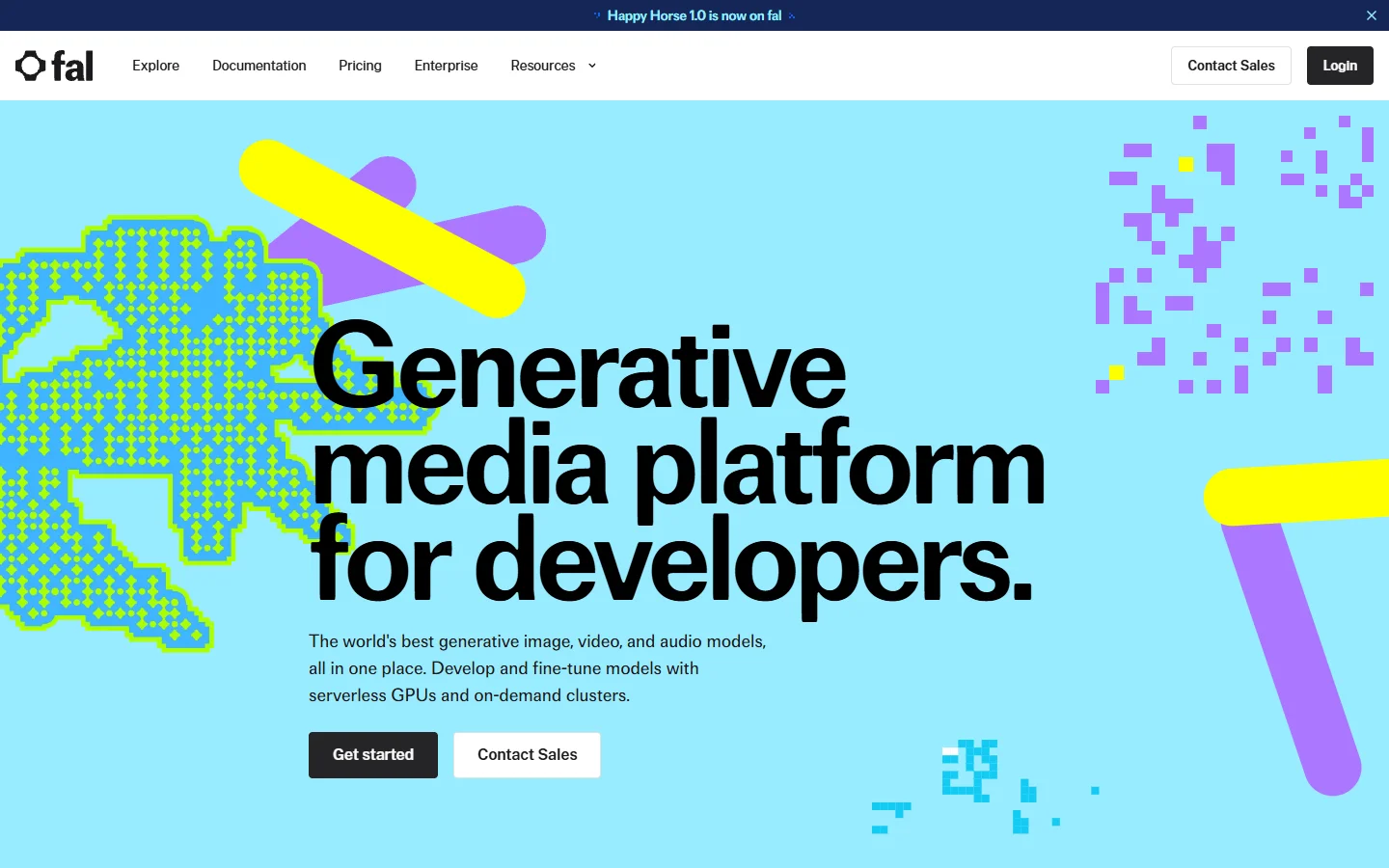
fal provides access to FLUX 2 Pro, Stable Diffusion 3.5, Recraft v4, and video models like Kling 3 Pro and Veo 3.1 through a single REST API. Pricing is pay-per-use with no monthly minimums, making it practical for both prototyping and production workloads. Their image generation models include options for every quality and speed tradeoff.
OpenAI (GPT Image and DALL-E): Best for Multi-Modal Pipelines
OpenAI combines text generation (GPT-5.1), image generation (GPT Image 1, DALL-E 3), and audio in one API. If your application already uses OpenAI for text, adding image generation requires minimal additional integration work.

The trade-off is that OpenAI’s image output tends toward illustrative rather than photorealistic. For marketing teams that need realistic AI photo output, dedicated image APIs like fal or Stability often produce better results. OpenAI’s strength is convenience when you already live in their ecosystem.
Stability AI: Best for Fine-Tuned Control
Stability AI offers Stable Diffusion 3.5 and their newer SDXL variants through a straightforward REST API. What sets them apart is the level of control: you can specify aspect ratios, seed values, negative prompts, and style presets directly in the API call.
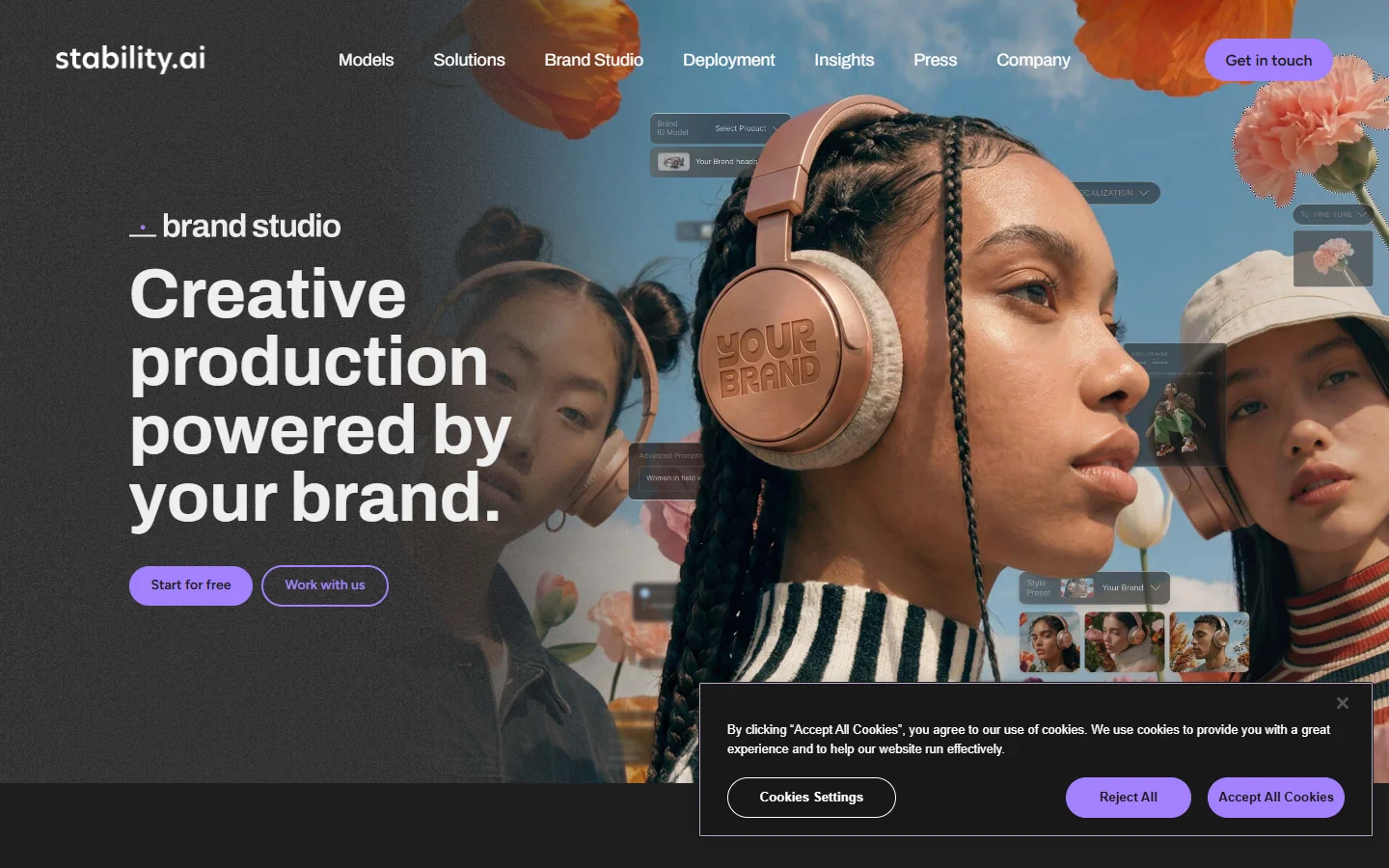
For developers building AI image editing workflows that require deterministic outputs (same prompt, same result), Stability’s seed-based reproducibility is valuable. Their inpainting and outpainting endpoints also work well for product photography automation. Teams building content pipelines that combine multiple generation steps often use Wireflow to orchestrate Stability and other model APIs into repeatable workflows.
Replicate: Best Model Marketplace
Replicate hosts thousands of community and commercial models behind a unified API. Rather than committing to one provider, you can test FLUX 1.1 Pro, Stable Diffusion, Recraft, and niche fine-tuned models all through the same endpoint format.
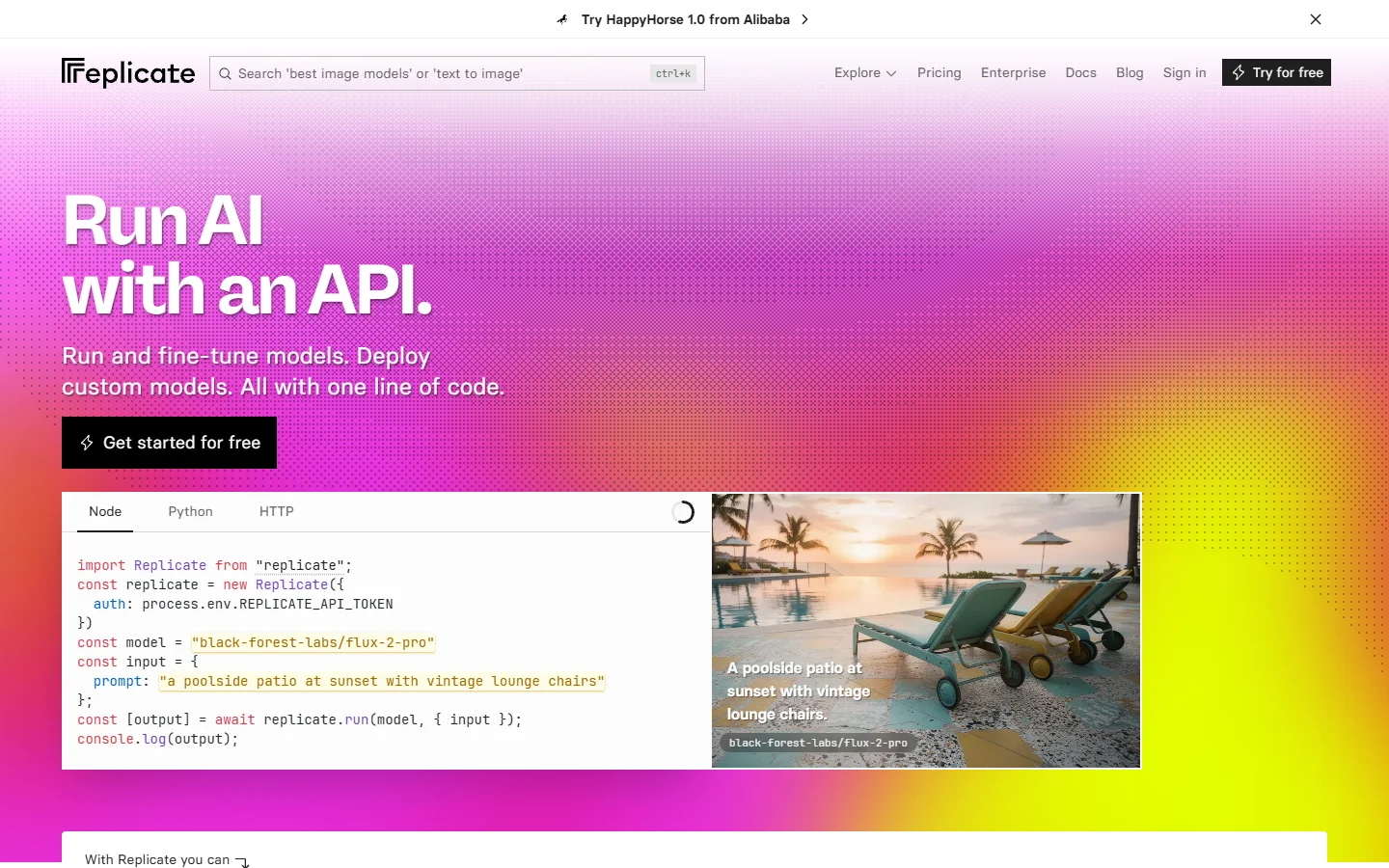
The downside is cold-start latency. Because Replicate spins up containers on demand, first requests can take 30 seconds or more. For high-traffic applications, dedicated deployments are available but increase cost. Replicate works best for experimentation and for teams that need access to specialized models like video generation or style transfer without managing infrastructure.
DeepInfra: Best Budget Option for Image APIs
DeepInfra focuses on running open-source models at low cost. Their FLUX Pro and SDXL endpoints are typically 30-50% cheaper than fal or Stability for equivalent outputs. If your content pipeline generates high volumes and cost is the primary constraint, DeepInfra is worth evaluating.
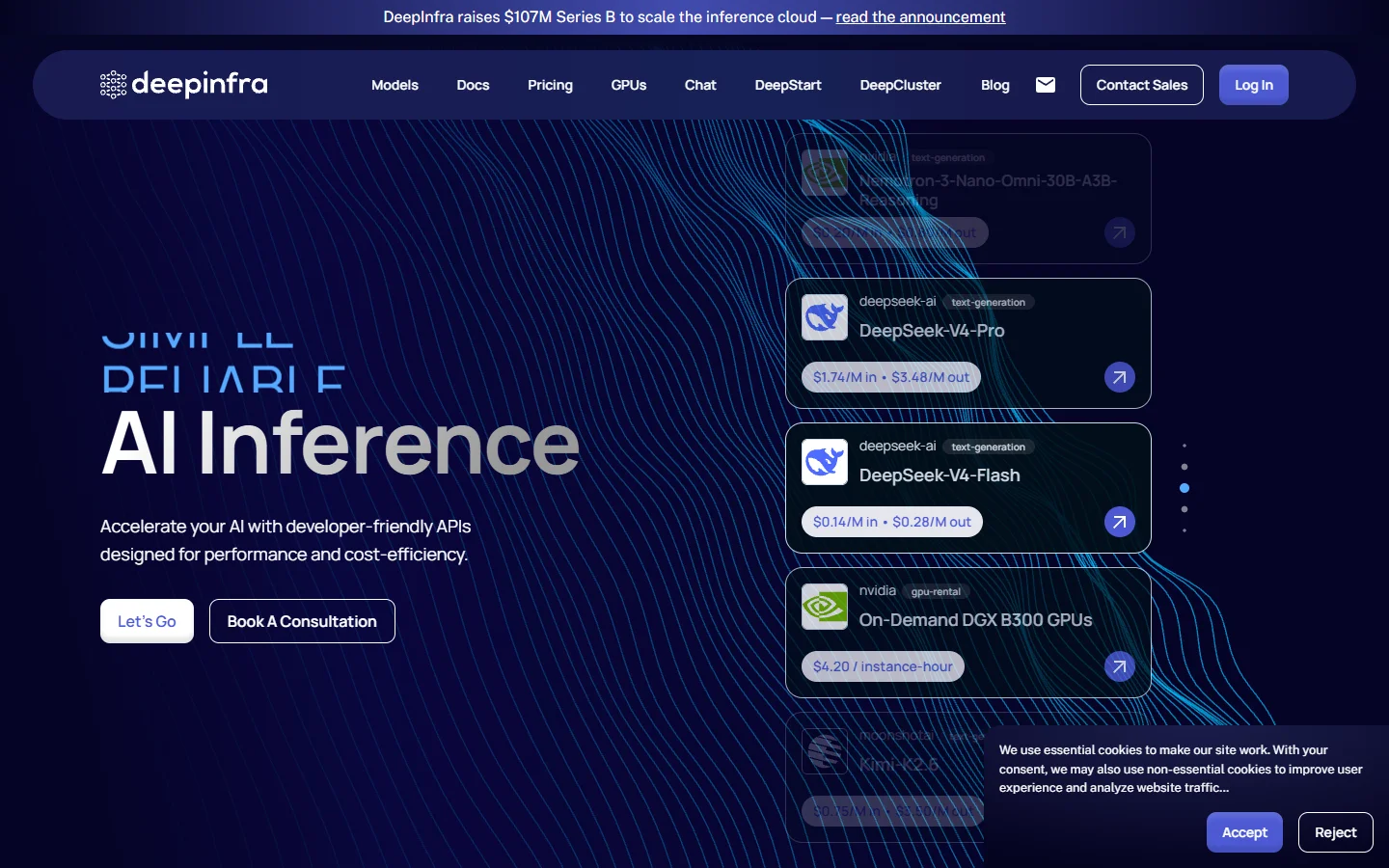
They also offer text-to-image generation with competitive latency on popular models. The trade-off is a smaller model library compared to Replicate and less polished documentation. But for production FLUX workloads where you know exactly which model you need, the savings add up.
Comparison Table
| Platform | Best For | Image Models | Cold Start | Pricing Model |
|---|---|---|---|---|
| fal.ai | Speed + video | FLUX 2, SD 3.5, Recraft | 5-10s | Pay per use |
| OpenAI | Multi-modal apps | GPT Image 1, DALL-E 3 | 2-5s | Pay per use |
| Stability AI | Fine-tuned control | SD 3.5, SDXL | 3-8s | Pay per use |
| Replicate | Model variety | 1000+ models | 15-60s | Pay per use |
| DeepInfra | Budget workloads | FLUX, SDXL | 8-15s | Pay per use |
How to Choose the Right API for Your Project
Start by identifying your primary use case. If you need high-quality AI image generation for marketing assets, fal.ai or Stability give you the best photorealistic output. If you need text and image in one pipeline, OpenAI reduces integration complexity.
For teams building automated content workflows that chain multiple API calls (generate image, upscale, remove background, composite), consider orchestration platforms. The Wireflow platform lets you connect any combination of these APIs into visual pipelines with built-in error handling and retry logic, which eliminates the need to write custom orchestration code.
Budget considerations also matter at scale:
- Under 1,000 images/month: Any platform works; pick for quality
- 1,000-10,000 images/month: fal.ai or DeepInfra for cost efficiency
- 10,000+ images/month: Negotiate volume pricing or self-host open models
Frequently Asked Questions
Which AI content generation API has the best image quality in 2026?
For photorealistic images, fal.ai running FLUX 2 Pro produces the most consistent results. For illustrated or artistic styles, Stability AI’s style presets offer more creative control. OpenAI’s GPT Image 1 is strong for prompt-driven creative work but less photorealistic.
Can I use multiple APIs in one project?
Yes. Most production pipelines use 2-3 APIs depending on the task. You might use OpenAI for text, fal for hero images, and Stability for product photography. Orchestration tools help manage the complexity of routing requests to the right model.
What is the cheapest API for bulk AI image generation?
DeepInfra offers the lowest per-image cost for FLUX and SDXL models. For very high volumes (50,000+ per month), self-hosting on your own GPUs becomes cheaper than any API, but requires significant GPU infrastructure investment.
How do FLUX models compare to Stable Diffusion for API use?
FLUX 2 Pro generally produces better photorealistic output with fewer artifacts than SD 3.5, especially for faces and text rendering. SD 3.5 has broader fine-tuning ecosystem support and more community LoRAs available. Both are accessible through fal, Replicate, and DeepInfra.
Do these APIs support video generation?
fal.ai leads in video API access, offering Kling 3 Pro, Veo 3.1, and Sora 2 Pro through the same endpoint format as their image models. OpenAI offers Sora 2 directly. Stability and DeepInfra are primarily focused on still images.
What latency should I expect from image generation APIs?
Most image APIs return results in 3-15 seconds for standard resolutions. fal.ai is fastest at 5-10 seconds including cold start. Video generation takes 30 seconds to several minutes depending on duration and quality settings.
Is there a free tier for testing AI image APIs?
fal.ai offers $10 in free credits. OpenAI provides limited free API access. Replicate gives new accounts a small credit pool. DeepInfra has a generous free tier for low-volume testing. All require a credit card for production use, but the free tiers are enough to test image quality before committing.
Conclusion
The AI content generation API space in 2026 is mature enough that the choice comes down to your specific needs rather than one platform being universally better. fal.ai wins on speed and model breadth for media generation. OpenAI wins on multi-modal convenience. Stability wins on precision control. Replicate wins on model variety. DeepInfra wins on cost.
For most teams building image-heavy applications, starting with fal.ai for primary generation and adding specialized APIs as needed is the practical approach. Whichever combination you choose, connecting them through a visual workflow builder saves significant development time compared to writing custom orchestration from scratch.