
AI lip sync tools have quietly become one of the most practical applications of generative video technology. Whether you need to dub a training video into multiple languages, localize marketing content for global audiences, or create talking-head videos from a single photo, the right lip sync tool can save weeks of manual editing. This guide covers the tools that actually deliver usable results in 2026, with notes on pricing, API access, and where each one fits best in a production workflow. For creators who need to chain lip sync with other generative steps (image generation, voice cloning, video assembly), platforms like Wireflow’s creative tools offer node-based pipelines that connect these capabilities end to end.
What AI Lip Sync Actually Does
At its core, AI lip sync uses neural networks to modify the mouth movements in a video so they match a new audio track. The best implementations also adjust jaw motion, facial expressions, and even head pose to maintain natural appearance. This is different from simple audio dubbing, where the original lip movements remain unchanged and viewers notice the mismatch immediately. Modern lip sync tools analyze phoneme timing in the new audio and generate frame-by-frame modifications to the speaker’s face, producing results that look native to the target language. If you are exploring how text-to-video workflows connect to lip sync, the underlying generation models have improved substantially over the past year.
HeyGen
HeyGen is the most complete all-in-one platform for video translation and lip sync. It supports 175+ languages, handles speaker detection automatically, and produces results that hold up well for clips under 15 minutes. The free tier includes 3 videos per month, with the Creator plan at $24/month for unlimited processing. What sets HeyGen apart is the speed of its pipeline: upload a video, pick the target language, and the platform handles voice cloning, translation, and lip sync in one pass. The 0.02-second facial sync accuracy is strong enough for most business content. The main limitation is that very long videos (30+ minutes) can show inconsistencies. For teams producing AI avatar videos at scale, HeyGen remains the default starting point.
Synthesia
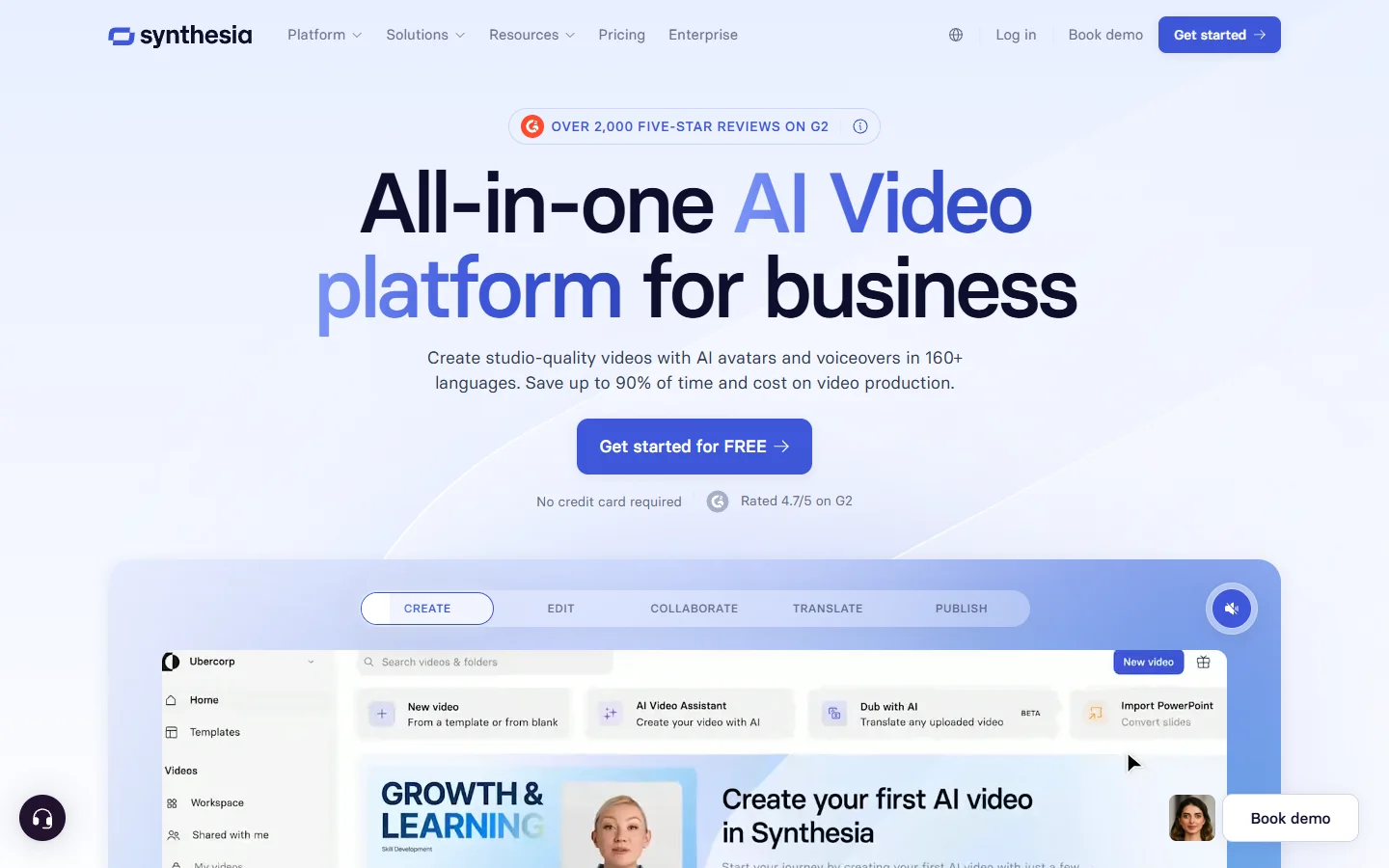
Synthesia approaches lip sync from a different angle. Rather than dubbing existing footage, it generates entire videos from scratch using AI avatars that lip sync to any script. The dubbing feature was added later and focuses on preserving speaker identity across languages while adjusting lip movements to match translated audio. Synthesia is strongest for enterprise training and internal communications where you need a consistent on-screen presenter across dozens of languages. The avatar quality is high, though the generated faces can still fall into uncanny-valley territory during rapid speech. Pricing starts at $29/month for the Starter plan. If your workflow also requires still image animation, the combination of image generation plus Synthesia’s avatar engine covers both use cases.
Sync Labs
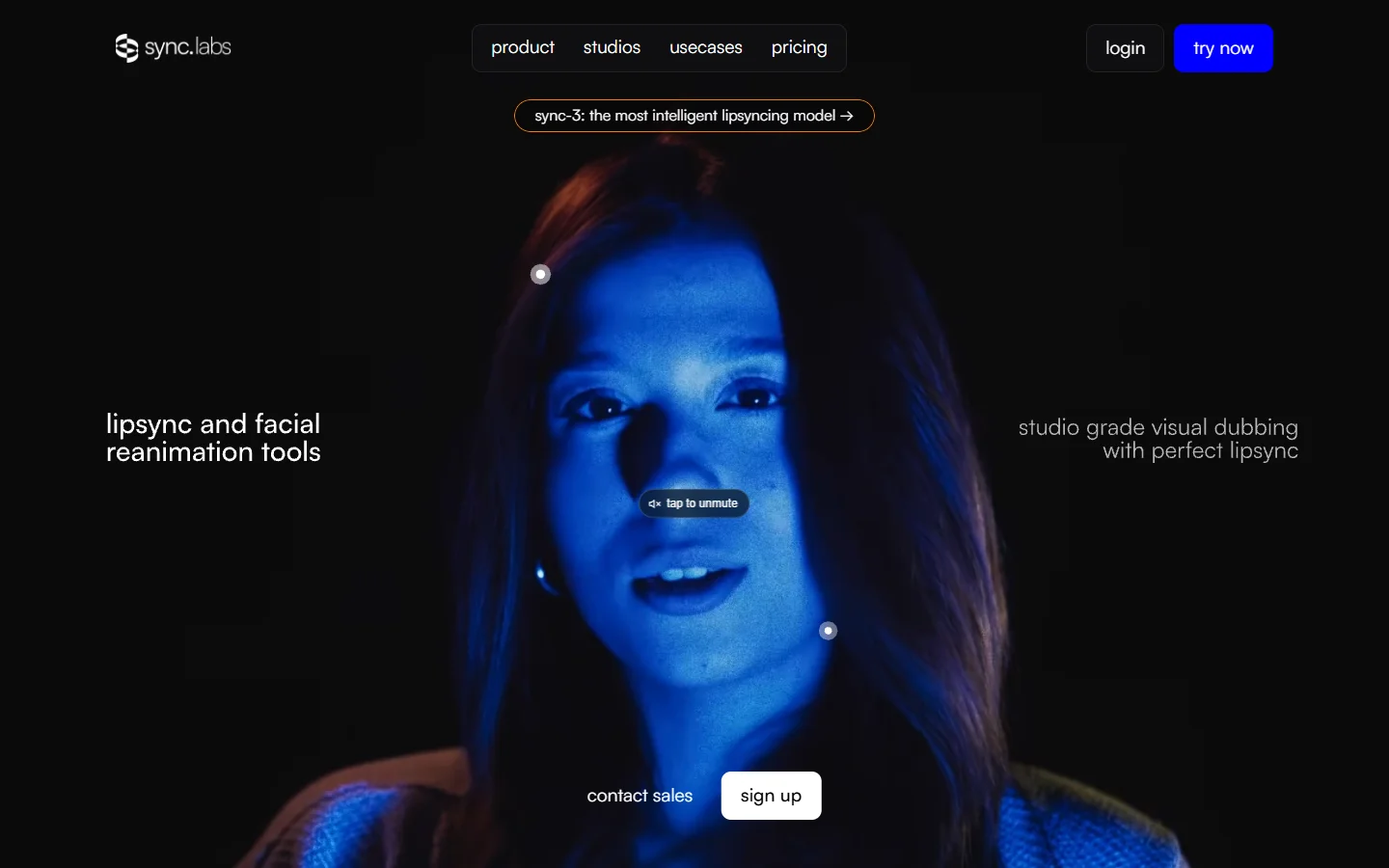
Sync Labs is purpose-built for developers who need lip sync as an API. The platform offers both a web studio for quick one-off jobs and a REST API for production integrations. The API accepts a video file and an audio track, then returns a new video with synchronized lip movements. For technical teams, Sync Labs is often the best choice because you can embed it directly into your content pipeline. The output quality is competitive with HeyGen for standard talking-head footage, and the API pricing is usage-based rather than subscription-locked. The trade-off is that Sync Labs does not include translation or voice cloning in its core product, so you need to bring your own translated audio.
Rask AI
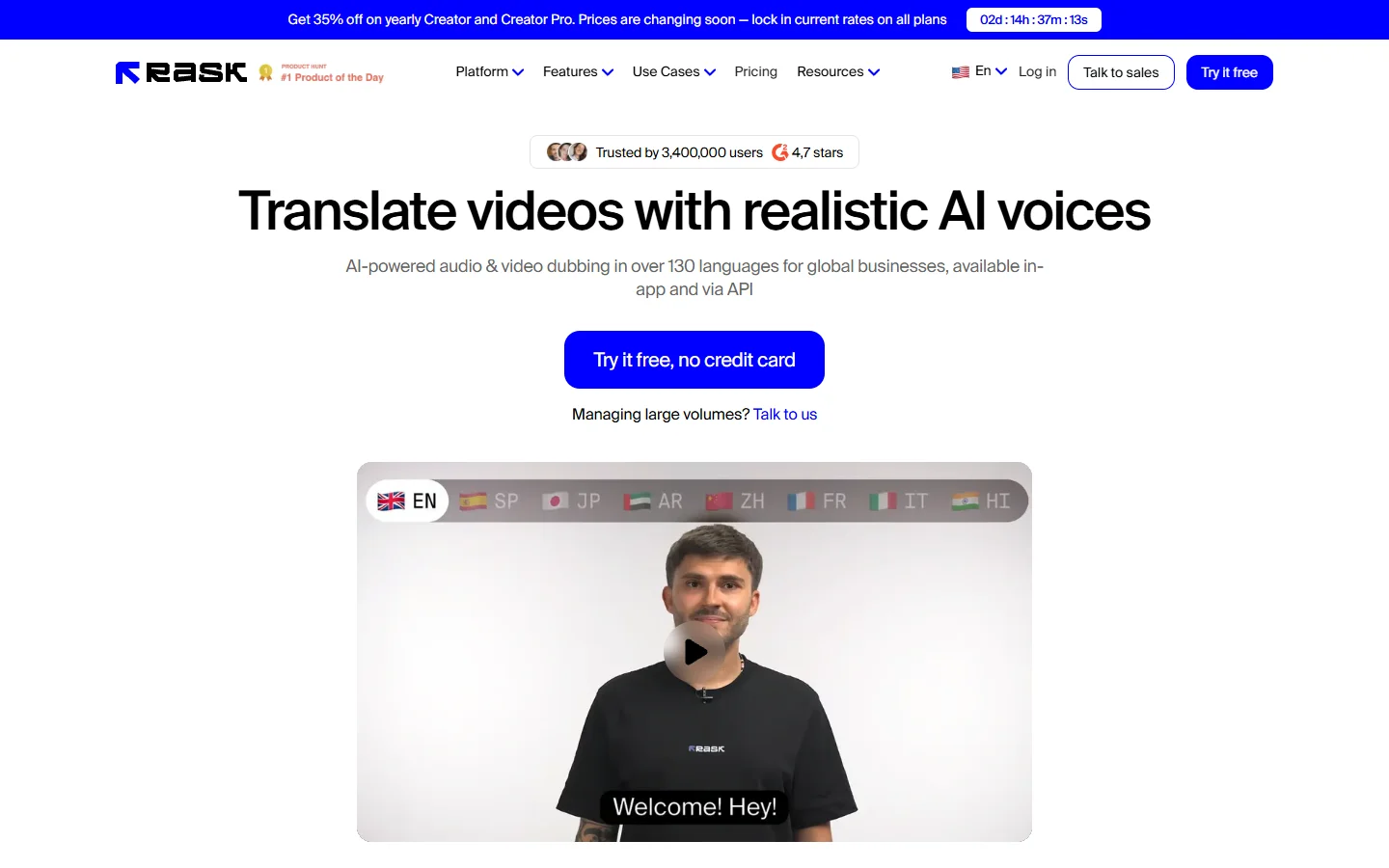
Rask AI specializes in video localization with a focus on preserving the original speaker’s voice characteristics. The platform translates, dubs, and lip syncs in a single workflow, supporting 130+ languages. What distinguishes Rask is its voice cloning accuracy, which captures subtle vocal mannerisms that other tools flatten out. The lip sync quality is solid for standard business and educational content, and creators who also produce social media videos will appreciate that Rask exports in formats optimized for each platform. Rask handles multi-speaker videos reasonably well, though it occasionally misassigns speakers in noisy environments. Pricing starts at $49/month for 25 minutes of processing.
ElevenLabs
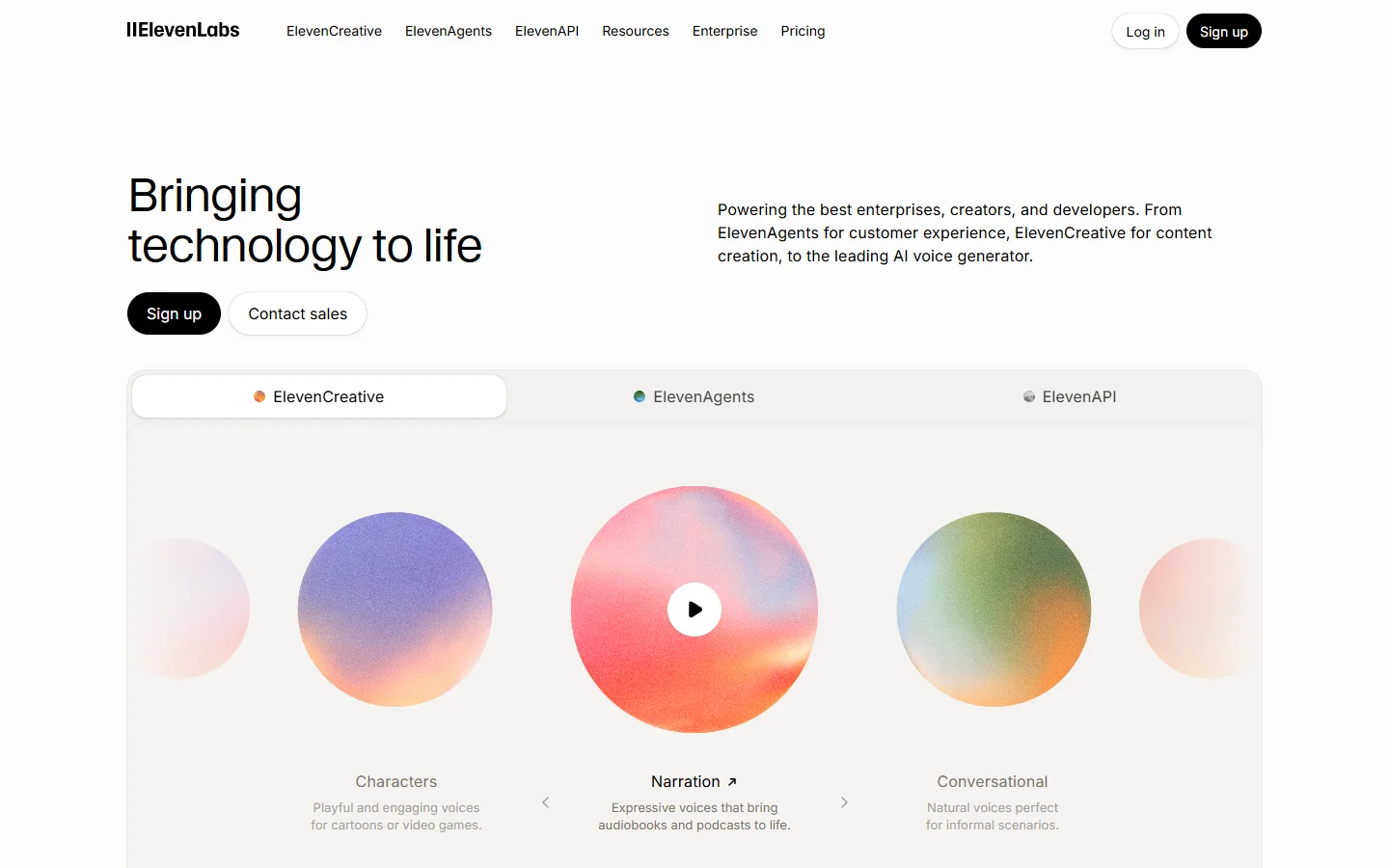
ElevenLabs started as a voice cloning and text-to-speech platform and has expanded into full dubbing workflows with its Dubbing Studio. The voice quality is widely considered the best in the industry, with natural intonation and emotional range that most competitors cannot match. The lip sync component is newer and not as mature as HeyGen’s dedicated video engine, but the audio quality advantage makes ElevenLabs the right choice when voice fidelity matters more than visual perfection. The API is well-documented and supports both synchronous and asynchronous processing. The free tier is generous for testing, with paid plans starting at $5/month. If you are building AI voice generation pipelines, ElevenLabs integrates cleanly with most workflow tools.
D-ID
D-ID focuses on creating talking avatar videos from a single still photo. Upload a portrait, provide an audio track or text script, and D-ID generates a video where the face speaks naturally with synchronized lip movements. This makes it useful for creating talking photos without needing any original video footage. The platform is particularly popular for creating personalized video messages, educational content, and customer-facing AI representatives. The Creative Reality Studio offers both a web interface and an API. Pricing is credit-based, with the Lite plan at $5.90/month for 10 credits. The main limitation is that results work best with front-facing portraits in good lighting; side profiles or complex backgrounds can produce artifacts.
How to Choose the Right Lip Sync Tool
The best tool depends on your specific use case. For full video translation across marketing content and courses, HeyGen or Rask AI handle the entire pipeline from translation through lip sync in one pass. Enterprise training teams should consider Synthesia for its avatar consistency and brand control features. Developers needing API integration will find Sync Labs offers the cleanest REST interface with usage-based pricing. ElevenLabs excels when audio quality matters more than visual sync precision. D-ID creates talking videos from a single still image when no source footage exists. For multi-step creative pipelines that chain lip sync with image generation and video assembly, a node-based workflow platform lets you connect these steps without manual handoffs.

Connecting Lip Sync to Image Generation Workflows
One area where lip sync tools intersect with the broader AI image generation space is the stills-to-video pipeline. A common workflow starts with generating a photorealistic portrait using a model like FLUX 1.1 Pro, then feeding that image into D-ID or a similar tool to create a talking-head video. The quality of the initial image directly affects the lip sync output, which is why high-fidelity generation models matter here.

For production teams running these pipelines repeatedly, automation is essential. Rather than manually downloading images, uploading them to a lip sync service, waiting for output, and then passing results to the next step, Wireflow’s AI platform connects generation, lip sync, and post-processing nodes in a single executable workflow. This eliminates the copy-paste overhead that slows down content teams working across multiple tools.
FAQ
What is AI lip sync and how does it work?
AI lip sync uses deep learning models to modify mouth and jaw movements in video footage so they match a new audio track. The system analyzes phoneme timing, maps it to facial landmarks, and generates frame-by-frame modifications that make the speaker appear to naturally say the new words, even in a different language.
Which AI lip sync tool has the best quality?
For dubbing existing footage, HeyGen and Rask AI consistently produce the most natural results. For voice quality specifically, ElevenLabs leads the field. The best choice depends on whether visual accuracy or audio fidelity is your priority.
Can I use AI lip sync for free?
Several tools offer free tiers. HeyGen provides 3 free videos per month, ElevenLabs has a generous free API quota, and D-ID offers a small credit allocation. The same pattern applies to free AI video generators more broadly. For production use, expect to pay between $5 and $49 per month depending on volume.
Is AI lip sync accurate enough for professional dubbing?
Yes, for most standard talking-head content. The technology handles front-facing speakers in good lighting very well, similar to how AI photo enhancement works best with clean source material. Edge cases like extreme head angles, multiple overlapping speakers, or heavy occlusion (sunglasses, masks) still challenge current models.
How does AI lip sync relate to AI image generation?
The connection is the stills-to-video pipeline. AI image generators like FLUX create photorealistic portraits that can then be animated with lip sync tools like D-ID. Better source images produce better lip sync results, making the choice of generation model relevant even for video workflows.
What languages do AI lip sync tools support?
Coverage varies by tool. HeyGen supports 175+ languages, Rask AI covers 130+, and Synthesia handles most major languages. Sync Labs and D-ID work with any audio track you provide, so language support depends on your translation and voice generation pipeline.
Can I integrate AI lip sync into my own application?
Yes. Sync Labs, ElevenLabs, and D-ID all offer REST APIs for programmatic access. HeyGen and Rask AI also have API options on higher-tier plans. For complex integrations that chain multiple AI models, a workflow orchestration layer simplifies the connection logic.
Conclusion
AI lip sync has matured from a novelty into a reliable production tool. The six platforms covered here each serve distinct needs, from HeyGen’s all-in-one simplicity to Sync Labs’ developer-first API. The technology works best for standard talking-head content and continues to improve for more complex scenarios. For teams building automated content pipelines that combine image generation, voice synthesis, and lip sync into repeatable workflows, connecting these tools through a workflow orchestration layer removes the manual steps that slow production down.