
Most people searching for an Arcads alternative are not unhappy with the video quality. They are unhappy with one of three things: the per-render pricing, the shared actor library that makes every account in a niche look the same, or the fact that the tool only solves the talking-head half of an ad and leaves the static frames to somebody else. This is a look at four tools that replace Arcads in different ways, and at where image generation belongs in the same workflow that produces your social ad creative.
One thing to settle before the list: every tool here generates video with a synthetic presenter, and none of them produce the stills, covers or product frames that surround that video in a live campaign. Judging them against each other means judging the video half only, in the same way a video model comparison holds everything else constant.
The static half stays with an image model, which is why the last two sections deal with it separately, and why most ecommerce product video setups end up running two tools rather than one.
What Arcads actually does well
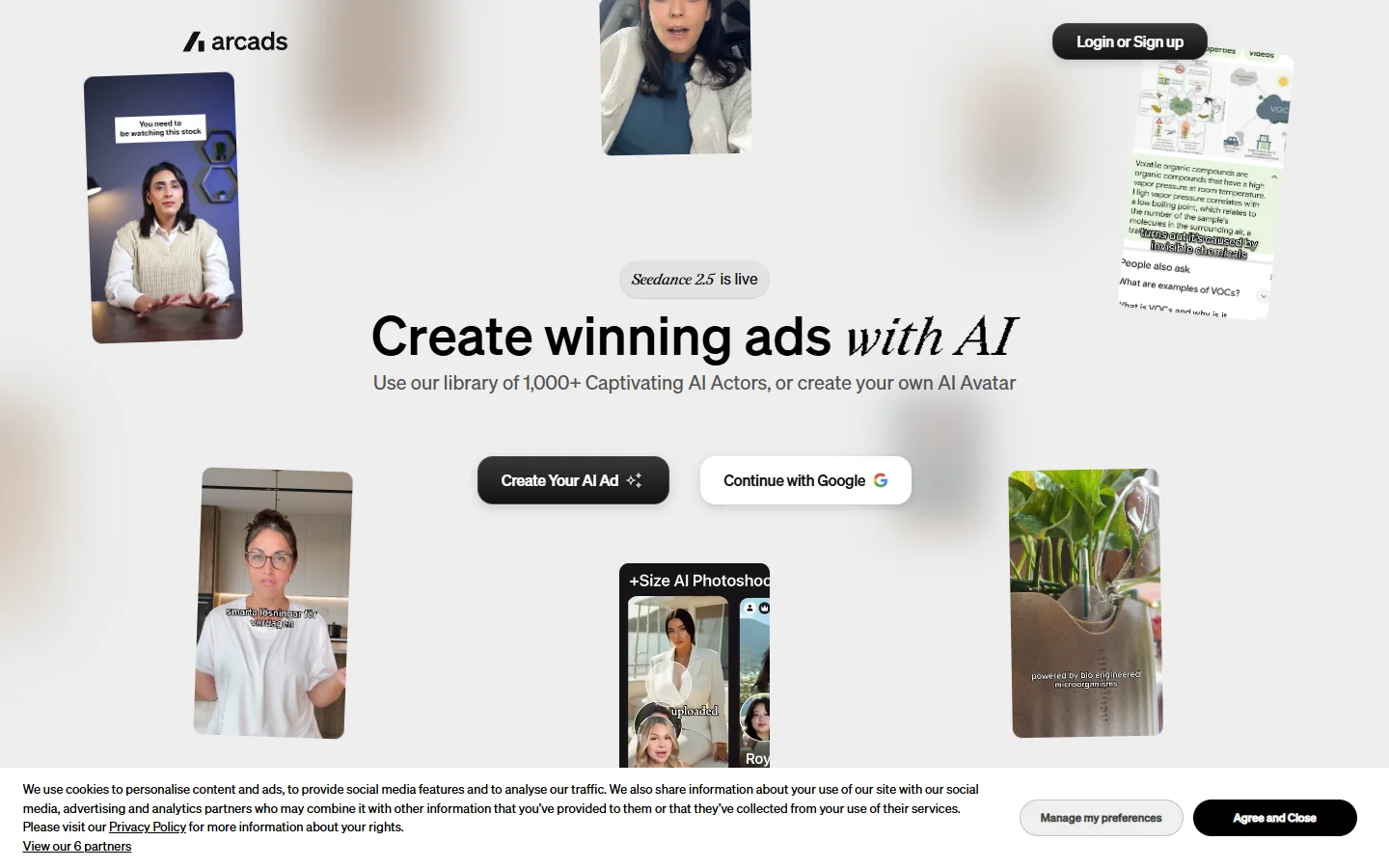
Arcads is script-first. You write the hook and the body, pick from a library of more than a thousand AI actors, and get back a vertical talking-head ad with gestures and delivery that reads as human at feed size. For performance teams that already keep a hook bank, that input format is the whole appeal: one script, six faces, six variants in an afternoon.
The limits are equally clear. Pricing is per render, so testing volume is what makes the bill move rather than seat count. The actor library is shared across every customer, which is a real problem in crowded niches like supplements and skincare. And it produces zero statics, so an account running image ads alongside video still needs a second tool, usually something in the AI avatar generation category or a straight image model.
What to compare when you swap
Feature lists are not useful here because all of these tools claim the same features, the same way every entry in a video generator alternatives roundup claims to be the fastest. Four things actually separate them in practice:
- Pricing shape. Per-render credits punish creative testing. Flat monthly plans punish low volume. Match the shape to how many variants you actually ship.
- Actor ownership. A shared library means your competitor can use your spokesperson. A custom avatar you train once and reuse is a different asset class.
- Input format. Script-first suits teams with a hook bank. URL-first suits ecommerce teams who want variants of a product page.
- API access. If a human has to click through a UI for every variant, the operator becomes the bottleneck at around fifteen ads a month.
The fourth point is the one that decides whether a tool survives contact with a real ad account. Teams shipping serious variant volume end up scripting part of the pipeline, which is the same reason the social video tooling stack has shifted toward endpoints rather than editors over the last two years.
Four Arcads alternatives worth testing
Creatify
Creatify is the closest direct substitute. Instead of writing a script, you paste a product URL, and it scrapes the images and copy, drafts the script, and renders an avatar ad from it. The input format is the difference: a URL is faster than a brief when you want thirty variants of one product.
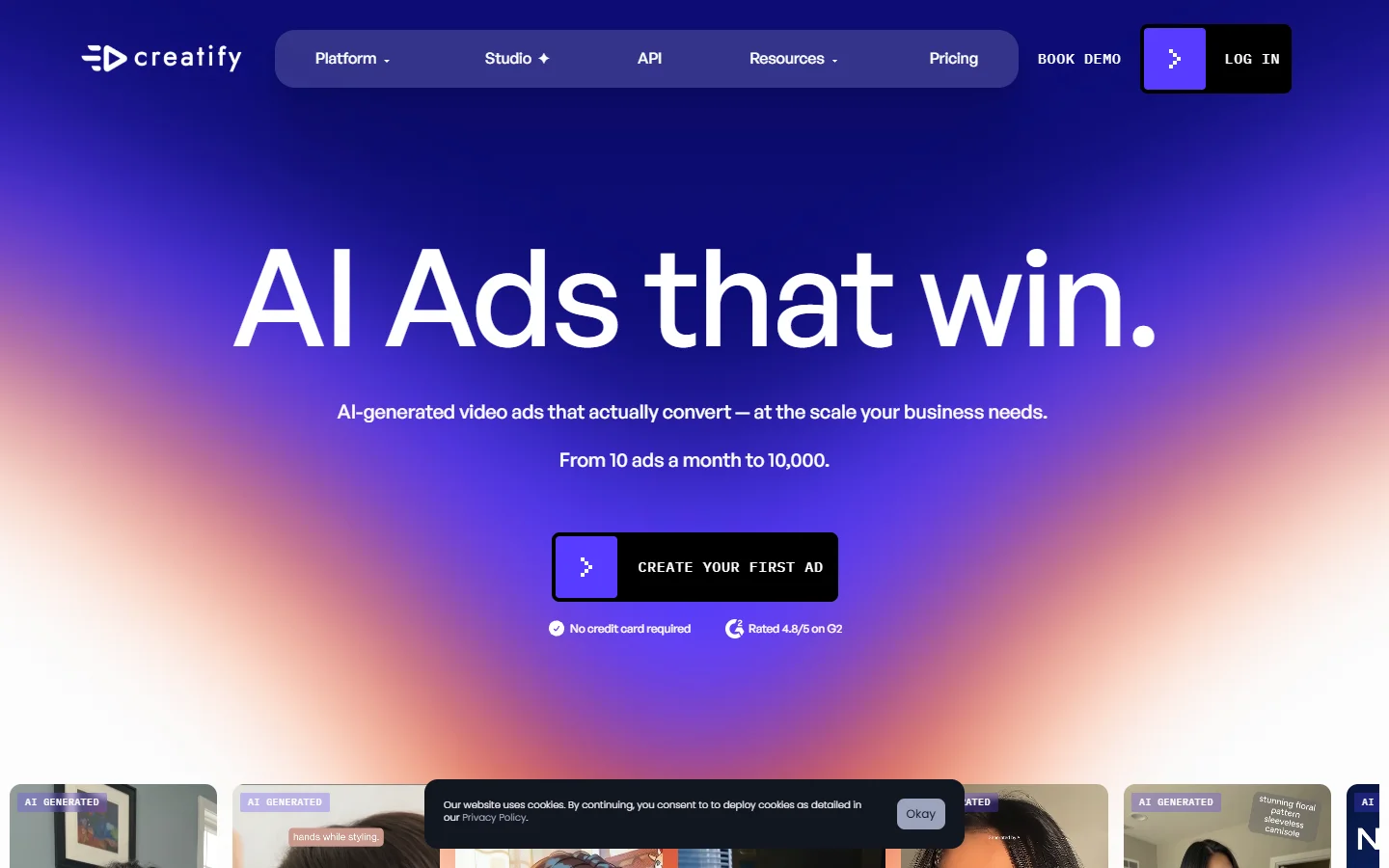
Batch mode is the feature that matters at volume, letting you queue a list of hooks against one product and collect a set of finished videos rather than one at a time. The tradeoff is script quality. Scraped copy produces serviceable hooks, not good ones, so most teams rewrite the first line by hand anyway, then swap the scraped product shots for cleaner frames from a proper product photo workflow.
HeyGen
HeyGen is the strongest option if avatar ownership is the reason you are leaving. You can record two minutes of footage and get a custom avatar that only you can use, which solves the shared-library problem outright and gives you a spokesperson that stays consistent across a year of campaigns.

It is also the most developer-friendly of the four, with a documented API and multilingual dubbing built in, which puts it in the same bracket as the orchestration APIs teams use to script the rest of the pipeline. It is less of a purpose-built ad machine than Arcads, so expect to do more assembly yourself: HeyGen gives you a clean presenter clip, not a finished ad with b-roll and captions.
Synthesia
Synthesia comes from the corporate video side rather than the paid social side, and it shows in the output. Presenters are polished, studio-lit and clearly professional, which is exactly wrong for a scrappy TikTok hook and exactly right for a product explainer, a demo or a landing page video.
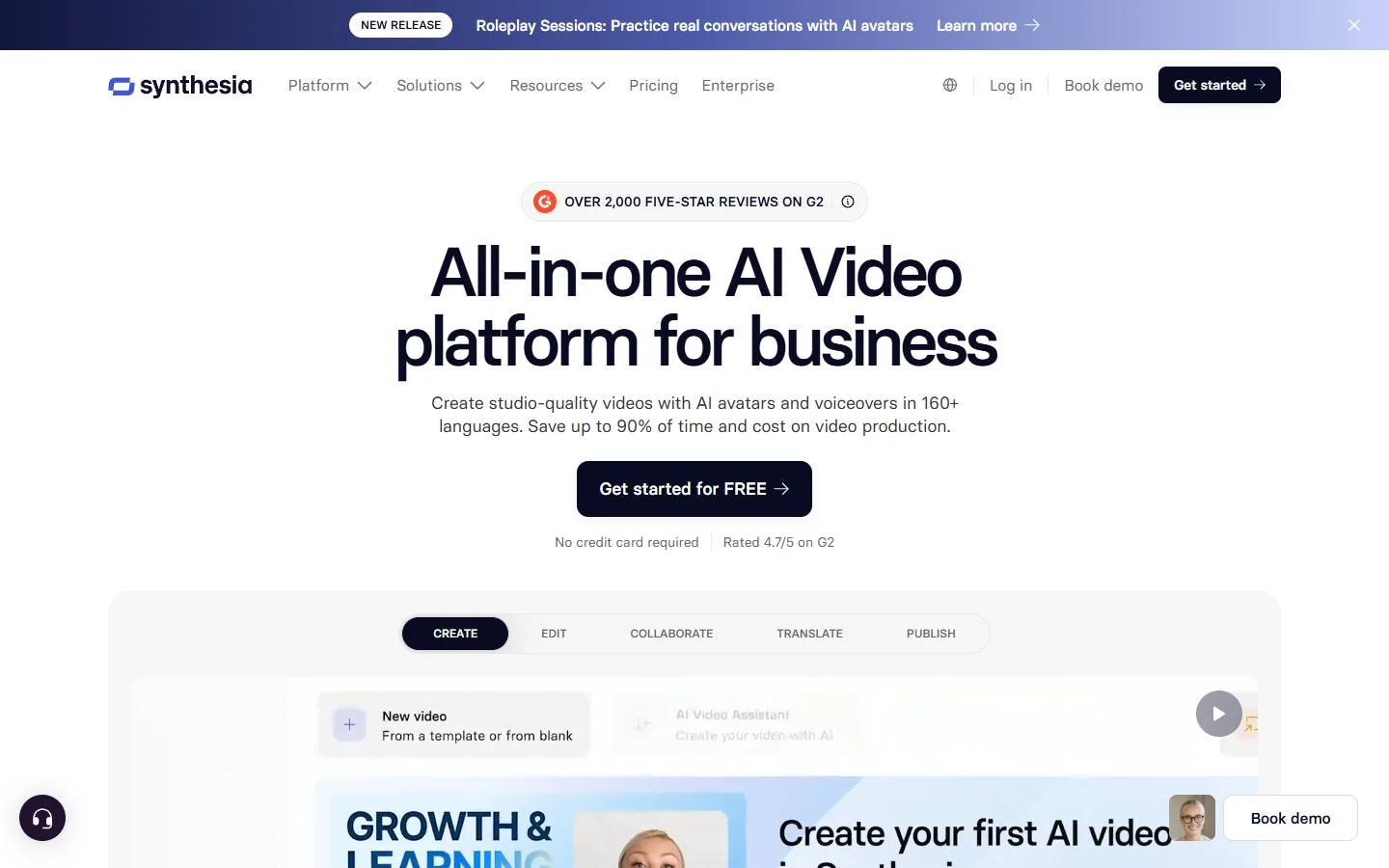
Pick it when the ad you are making is not pretending to be user generated. Its avatar range and language coverage are the widest here, and the enterprise controls matter if the video needs legal review before it ships. Anyone weighing it directly against the field will find the Synthesia alternatives comparison useful for the pricing detail.
The Influencer AI
The Influencer AI inverts the model. Rather than renting actors per video, you build one AI persona you own, then reuse that same face across video, stills and social posts. For a brand that wants a recognizable spokesperson without hiring one, that consistency is worth more than raw render quality.
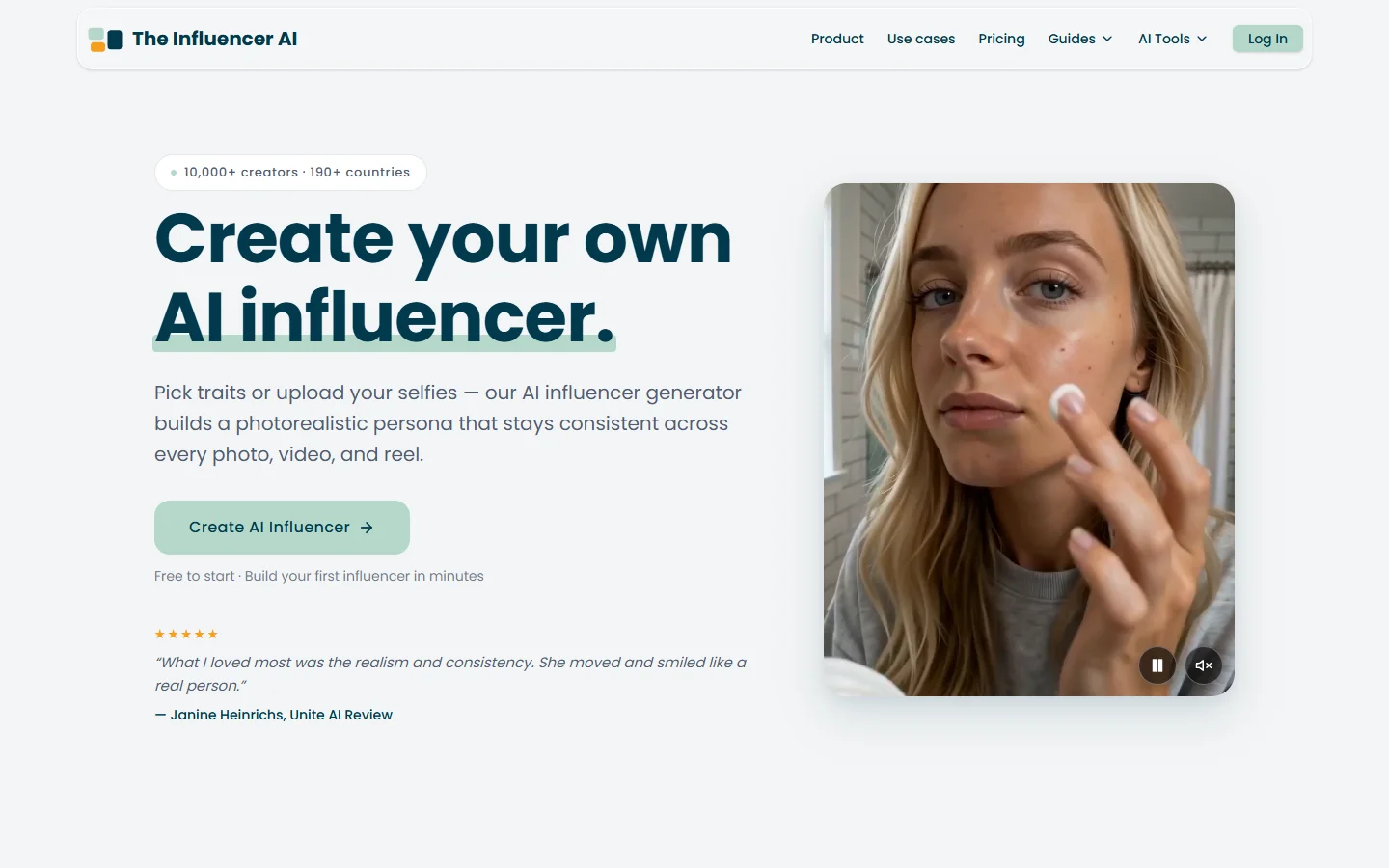
The catch is that a single persona is also a single point of failure. If the face does not test well, you have nothing to rotate to, whereas a library-based tool lets you swap actors and rerun the same script the same day. Keeping a matching still set, generated the way AI headshots are, at least keeps the persona consistent across formats.
Side by side
| Tool | Input | Actors | Pricing shape | Best for |
|---|---|---|---|---|
| Arcads | Script | Shared library, 1,000+ | Per render | Hook testing at speed |
| Creatify | Product URL | Shared library | Credit tiers | Ecommerce variant volume |
| HeyGen | Script | Custom, trained by you | Monthly + credits | Owned spokesperson, API work |
| Synthesia | Script | Studio library | Monthly seats | Explainers, multilingual |
| The Influencer AI | Prompt or photos | One persona you own | Monthly | Consistent brand face |
Nothing in that table generates a still image, which is the gap most Arcads comparisons never mention. A full ad set needs cover frames, end cards and static variants, and those come from an image model rather than a video one. The 2026 video generator roundup is the right reference if you also want raw text-to-video rather than an avatar tool.
Where image generation fits

Every video ad ships with statics around it. The thumbnail, the carousel variant, the before-and-after panel and the clean product frame that opens most product-led hooks are all image work, and pulling them out of a rendered video gives you an avatar caught mid-word. Generating them separately, the way an ecommerce product image workflow does, gives you a frame you actually composed.
Quality on the image side has moved faster than most ad teams have noticed. Skin texture, fabric and packaging text now survive a full-screen look, which was not true two years ago, and the same realistic face generation techniques used for portrait work apply directly to a spokesperson still.
The practical trick is a locked prompt template per campaign with one variable line. That is what makes twenty images look like one brand instead of twenty experiments, and the FLUX prompt library is a fast way to get comparable starting points before you spend a day tuning your own.
How to run the swap in one week
Pick two tools, not four. Take one script that already worked, render it in both, and post the pair against the same audience with the same budget for five days. Judge on cost per result, not on which video looks better in the preview window, because feed performance and preview quality correlate less than most people expect.
The part that usually breaks the test is not the rendering. In a batch of twelve variants, hand-rewriting twelve hooks and re-uploading each one took longer than all twelve renders combined, which is the measurement behind the argument Wireflow makes for treating the whole ad build as one callable endpoint you can run a hook list through rather than a UI you operate.
Whatever you choose, keep the image half separate and scriptable. Video tools change every few months and swapping one out should not mean rebuilding your statics, which is easier to guarantee when the image step runs through its own programmatic generation setup.
FAQ
Is there a free Arcads alternative? Not a serious one for avatar video, because rendering costs real compute and every tool here charges for it. The free tier that does exist is on the image side, where you can produce ad stills and covers at no cost using a free AI image generator before committing to a paid video plan.
Which Arcads alternative is cheapest for high volume? Creatify usually wins on cost per variant because its credit tiers scale down per render, while HeyGen wins if your volume is a few long videos rather than many short ones. Run both against a real month of output before deciding, since the break-even point moves with video length.
Can I use my own face instead of a stock AI actor? Yes, with HeyGen or The Influencer AI. Both build an avatar from footage or photos that only your account can use, which is the main reason teams leave library-based tools. The same source material can seed a matching still set through an AI profile image workflow for thumbnails and profile art.
Do AI UGC ads still perform in 2026? They perform when the hook is good and the production is deliberately imperfect. Polished studio output reads as an ad and gets scrolled past, which is why the tools aimed at short-form social video deliberately render handheld angles and casual framing.
How many ad variants should I test at once? Between five and ten per hook concept is the working range for most accounts. Fewer than five and the data is noise, more than ten and the budget per variant drops too low to reach significance in a reasonable window.
Do I need a separate tool for ad images? Almost always. None of the avatar tools generate usable standalone stills, so a production setup runs one video tool and one image model. Comparisons like the 2026 image generator roundup are the fastest way to pick the image half.
Conclusion
There is no single replacement for Arcads because people leave it for different reasons. Go to Creatify for volume and speed, HeyGen for an avatar you own and an API to drive it, Synthesia for polished explainers, and The Influencer AI for one consistent brand face. Then settle the static half separately, because that is the part every comparison forgets and the part that keeps working when you swap video tools again next year. If you are starting from the image side, the FLUX image generator is a practical place to build a locked prompt template and test it on your own product first.