
The line between AI-generated speech and real human recordings has all but disappeared in 2026. Whether you need narration for a YouTube video, voiceovers for an ad campaign, or audio for an e-learning course, the latest text-to-speech engines produce output that listeners genuinely struggle to tell apart from a real person. In this guide we test and compare the most realistic AI voice generators available right now, covering quality, pricing, and the best use case for each tool. If you are already working with AI image generation to create visuals for your projects, pairing that with a convincing voiceover completes the production pipeline.
What Makes an AI Voice Sound Realistic
Three factors separate a convincing AI voice from a robotic one: prosody, emotion modeling, and breath simulation. Prosody refers to the natural rise and fall of pitch within a sentence. Emotion modeling lets the engine convey subtle feelings like excitement or hesitation without sounding exaggerated. Breath simulation inserts micro-pauses and inhalation sounds at natural points, which is the detail most listeners pick up on subconsciously. The tools below handle all three to varying degrees, and the best ones nail every aspect. For context on how AI models have evolved in both image and audio domains, the underlying transformer architectures share a common lineage.
ElevenLabs
ElevenLabs remains the benchmark for realistic AI speech in 2026. Its Turbo v2.5 model handles long-form narration without the quality degradation that plagues many competitors after a few paragraphs. Voice cloning requires only a short sample (under 30 seconds) and produces results that are remarkably close to the original speaker. The platform supports 32 languages, and its API is well documented with streaming support for real-time applications.
Best for: long-form narration, audiobooks, voice cloning
Pricing: free tier with limited characters; Pro starts at $22/month
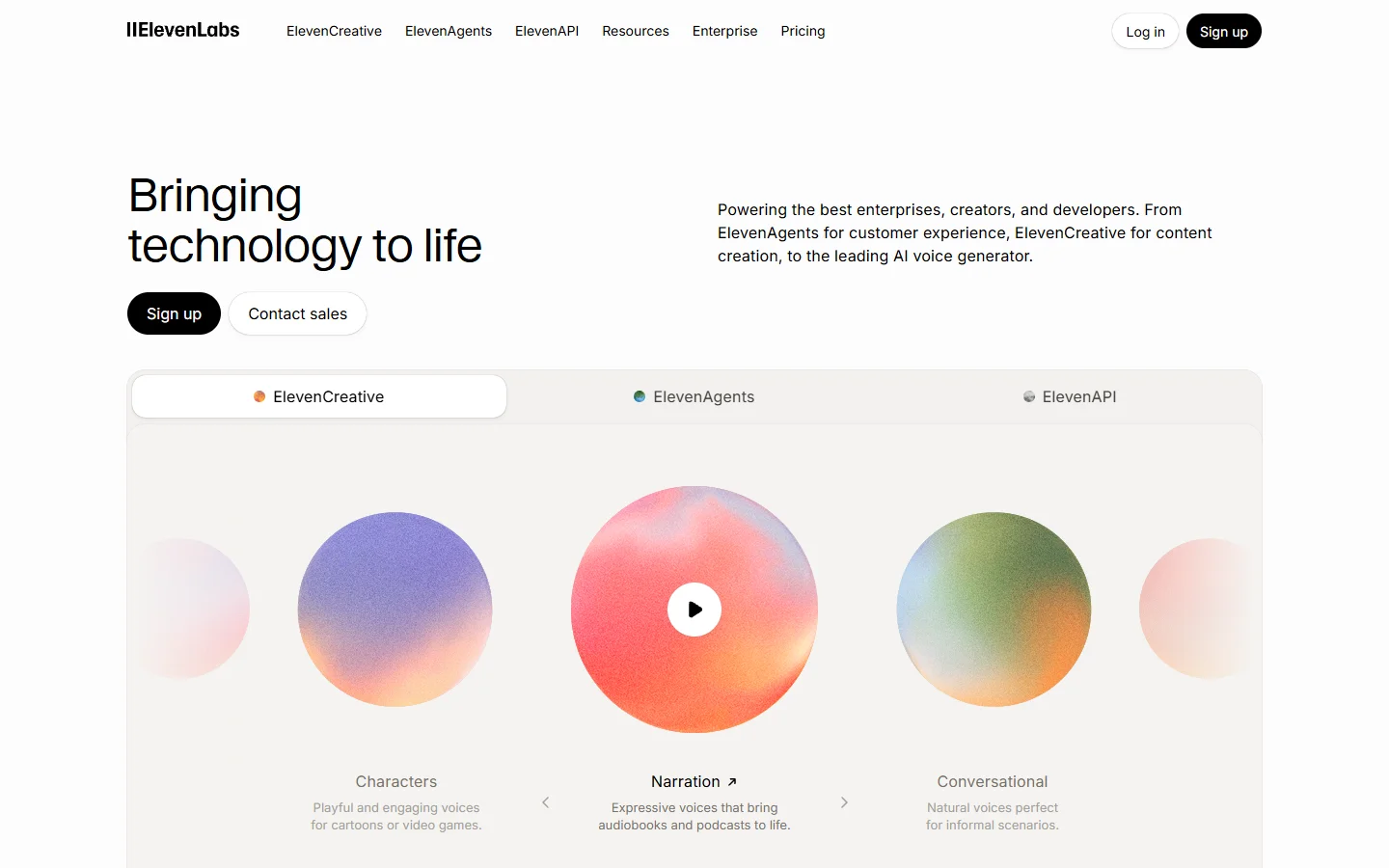
For creators who also build visual content with tools like FLUX text-to-image models, ElevenLabs pairs well because both tools emphasize quality over speed.
Fish Audio
Fish Audio has emerged as the go-to option for conversational and dialogue-heavy content. Where most TTS engines sound great reading a monologue but fall flat in back-and-forth exchanges, Fish Audio gets the pacing and timing right. Its voices express emotion naturally and consistently across long sessions. The platform also offers an open-source model (Fish Speech) for self-hosting, which appeals to developers who need full control over their pipeline.
Best for: dialogue, podcasts, conversational content
Pricing: free tier available; paid plans from $15/month
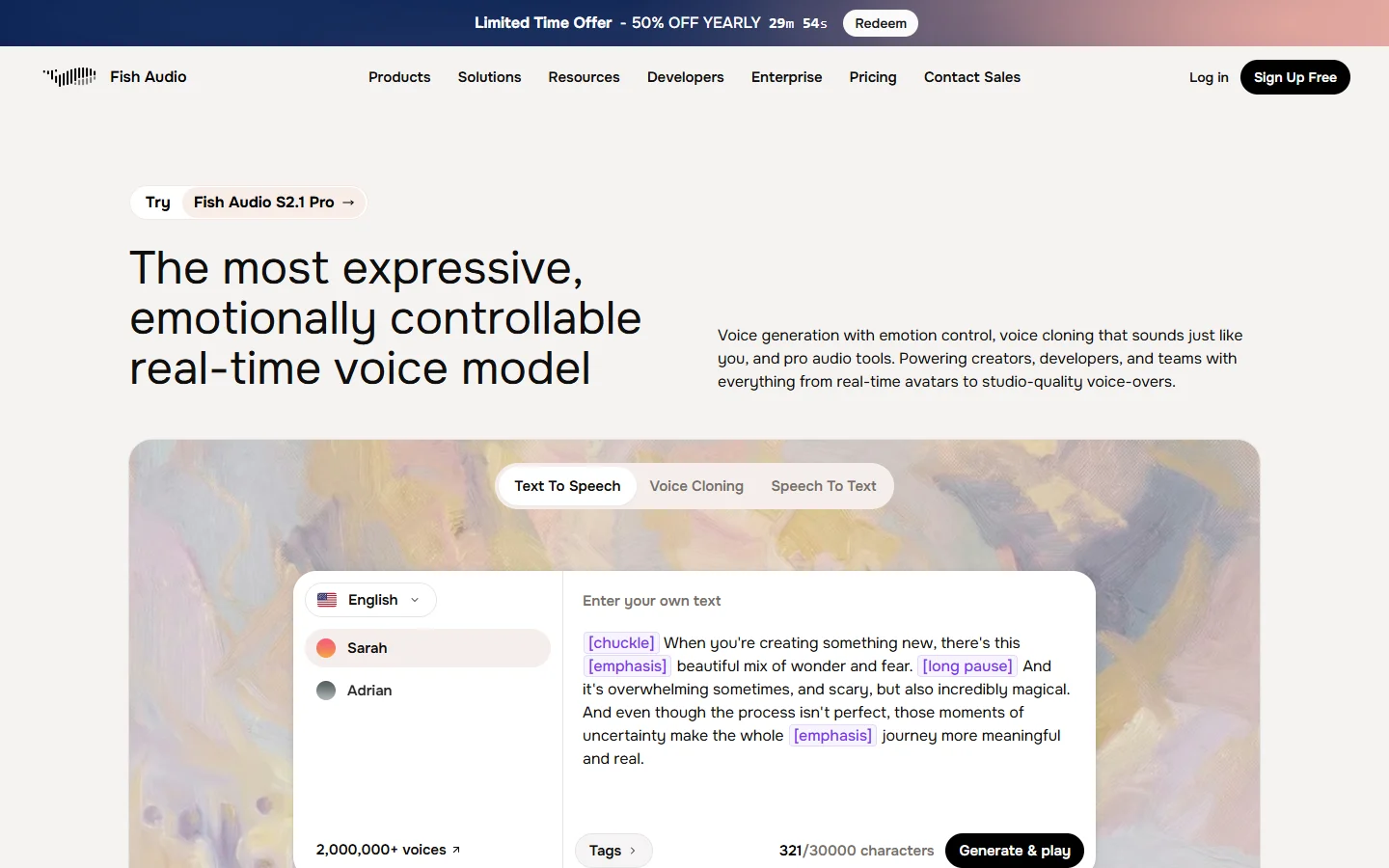
If you work with AI-generated visuals for product photos and need matching voiceovers for video ads, Fish Audio handles the conversational ad-read style well.

PlayHT
PlayHT stands out for its API-first approach. The PlayHT 2.0 model delivers expressive audio with real-time streaming at low latency, making it a strong pick for SaaS products that need embedded TTS. The voice library includes over 800 voices, and the cloning feature produces solid results from a 30-second sample. One unique strength is the emotion control parameter, which lets you dial in specific moods per sentence. You can try it free if you want to explore how workflow-driven voice generation fits into a broader creative pipeline.
Best for: API integration, SaaS embedding, real-time streaming
Pricing: free tier; Creator plan at $29/month
Murf AI
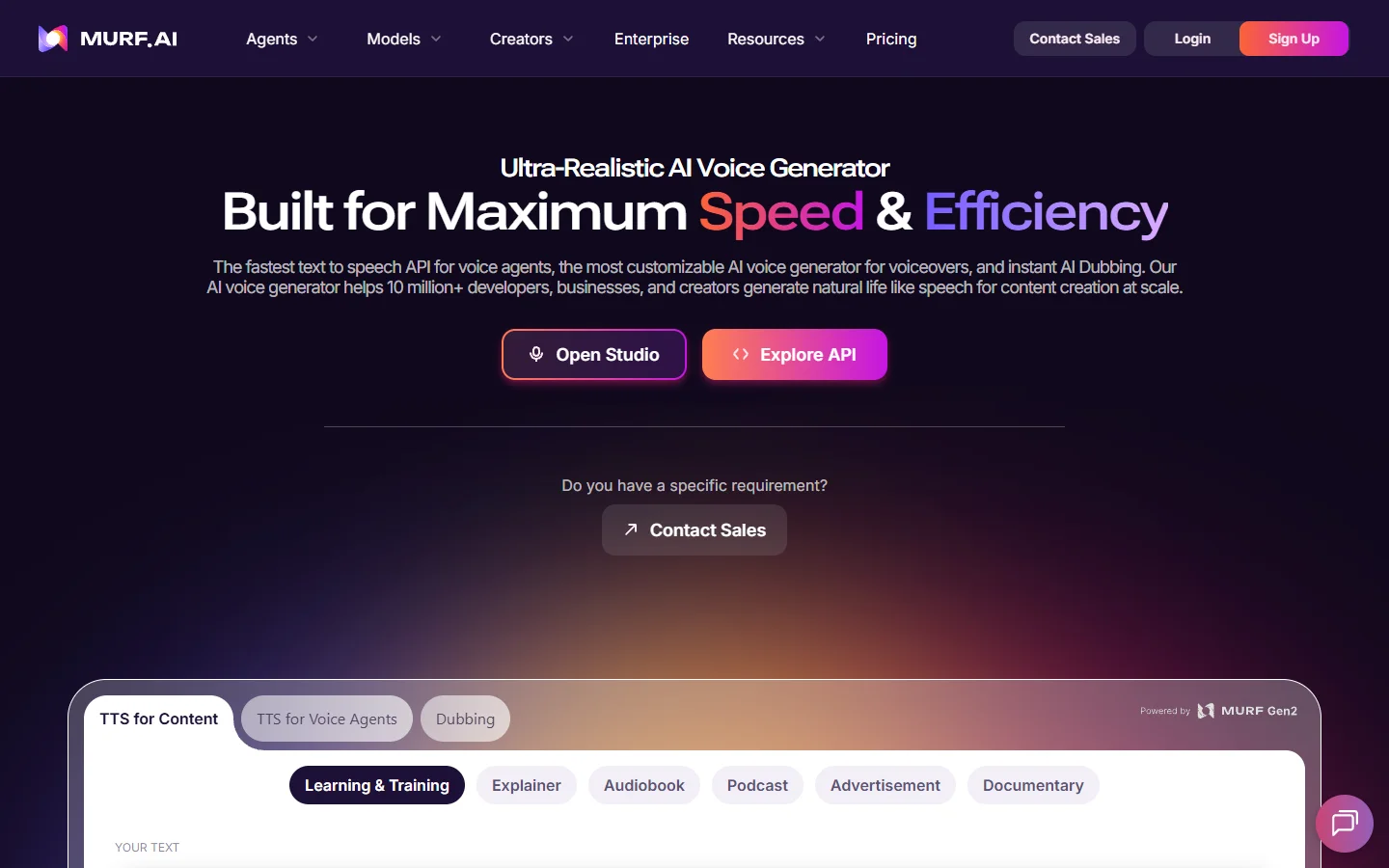
Murf AI targets business users who need polished voiceovers without touching code. The browser-based editor lets you type or paste a script, pick a voice, adjust pacing, and export in minutes. Murf supports 200+ voices across 20+ languages, and the studio includes basic video editing so you can sync voiceover to visuals in one place. The quality is a step below ElevenLabs for pure realism, but the workflow convenience more than compensates for most corporate use cases. Marketers already using AI background removal for product imagery will appreciate how Murf streamlines the audio side of content production.
Best for: enterprise presentations, e-learning, marketing videos
Pricing: Creator plan at $26/month; Enterprise pricing available
WellSaid Labs
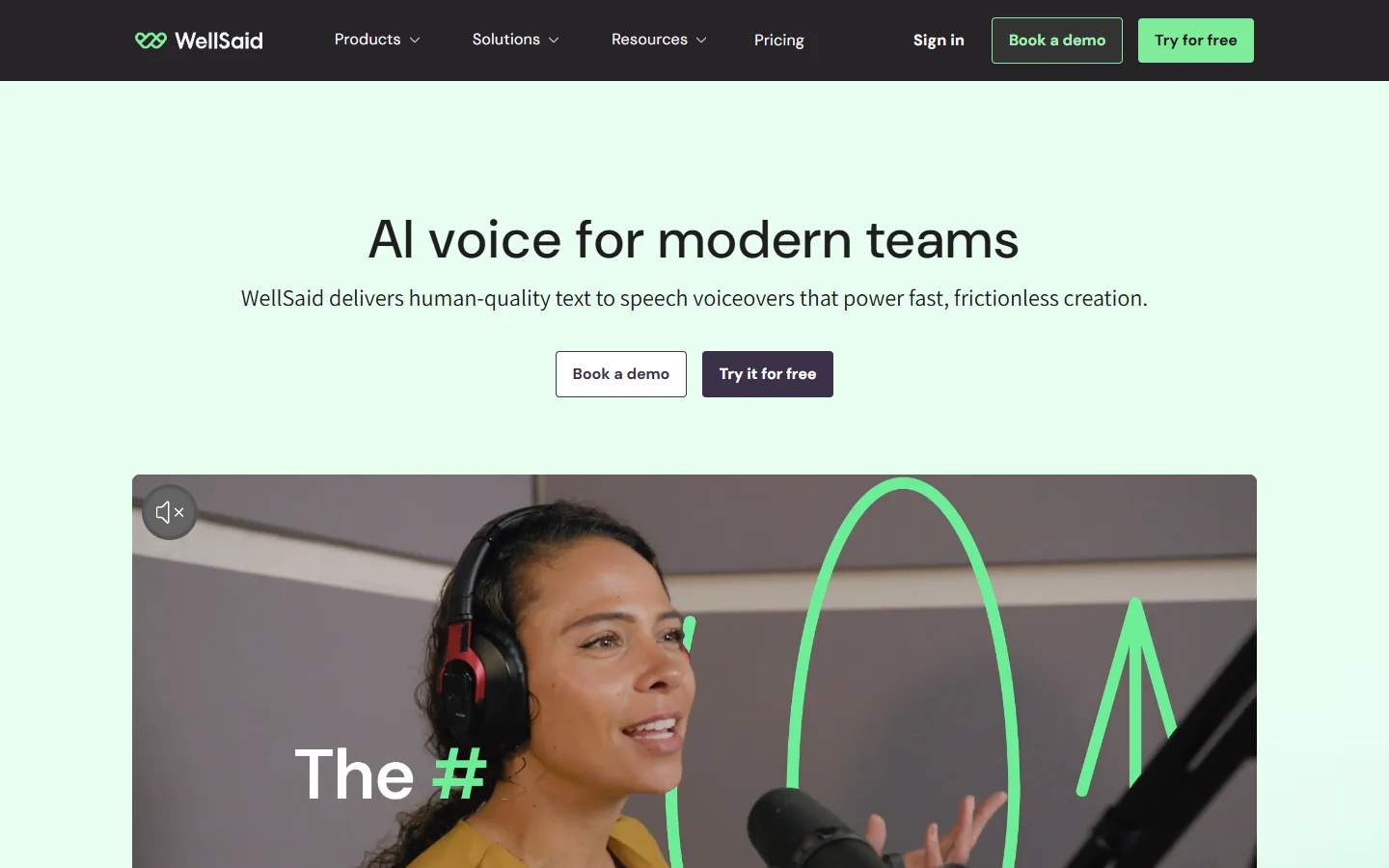
WellSaid Labs focuses on brand-safe, enterprise-grade voice generation. All voices are created with full consent from the original speakers, which matters for regulated industries. The platform offers 120+ avatars with consistent quality, and its pronunciation editor handles tricky product names and acronyms that trip up other engines. For teams that need realistic AI-generated headshots alongside voiceovers for training materials, WellSaid fits the enterprise content stack.
Best for: enterprise compliance, training content, brand voice
Pricing: custom enterprise pricing; team plans from $49/month

Speechify and Resemble AI
Two more tools worth mentioning for specific niches:
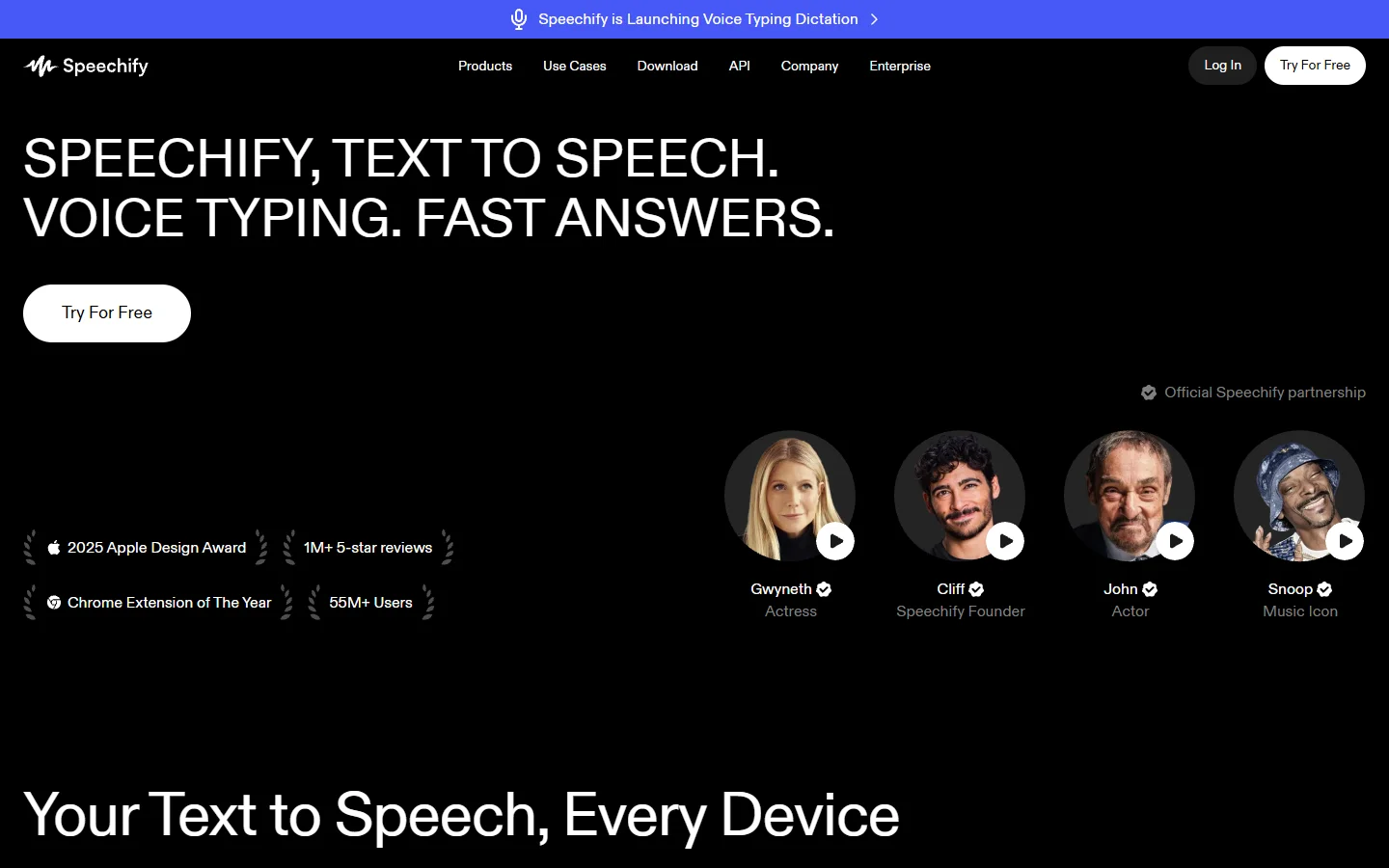
Speechify is the best option for personal use and accessibility. It converts any text, PDF, or web page into natural-sounding audio, which makes it popular with students and professionals who prefer listening over reading. The mobile app is polished, and the Chrome extension works seamlessly. Over 200 voices across 60+ languages give it broad coverage.
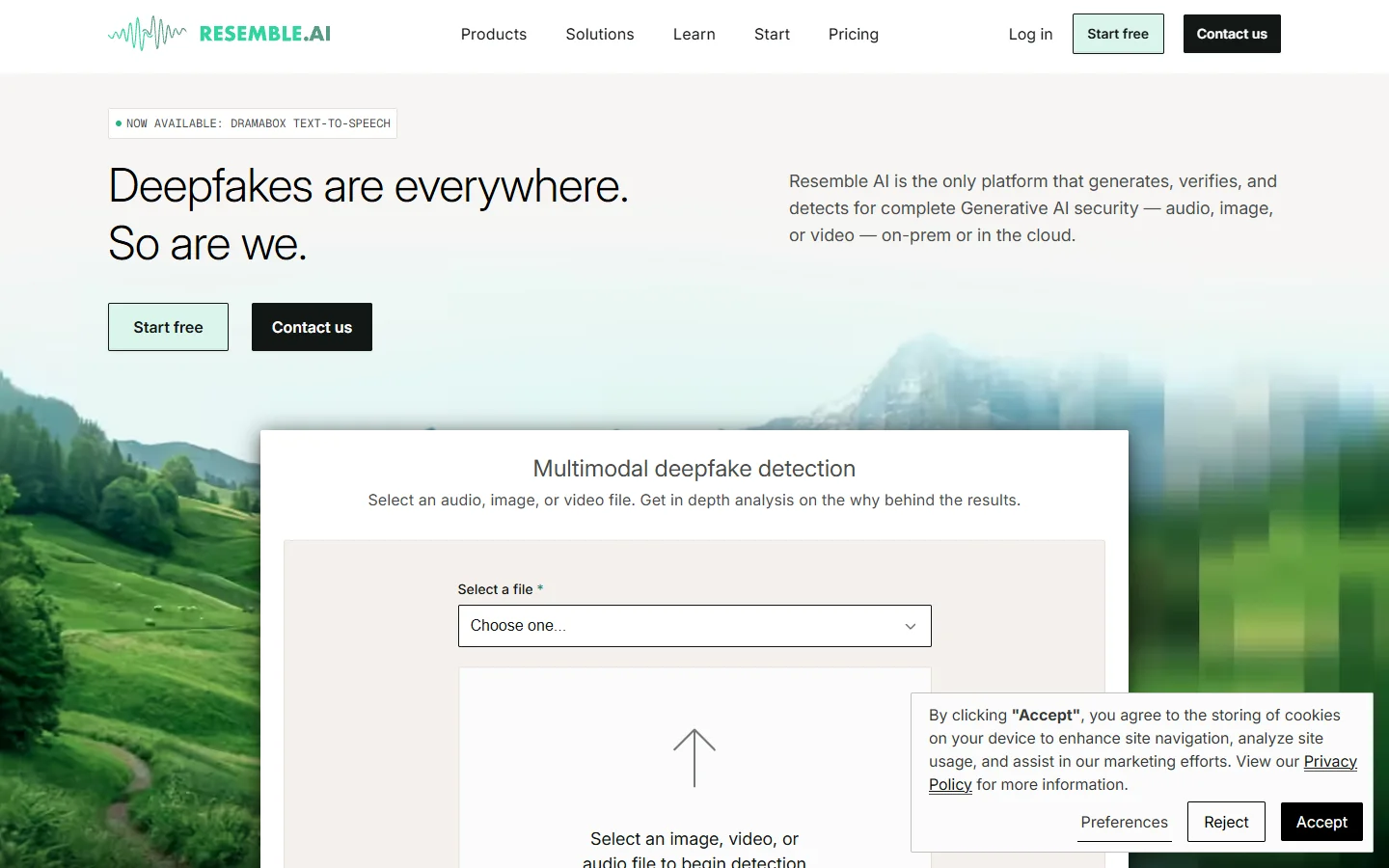
Resemble AI targets developers building custom voice applications. Its real-time voice cloning API, combined with emotion and language controls, makes it a strong choice for interactive products like AI assistants and games. Resemble also offers a deepfake detection tool (Resemblyzer), which adds a safety layer for companies concerned about misuse. The AI creative space is evolving quickly across both audio and visual generation, and tools like Resemble show how specialized the field has become. For a look at how other creative AI tools handle similar challenges with visual output, the monster-generator-review on AI Directories covers an interesting adjacent use case.
Comparison Table
The table below summarizes each tool’s strengths side by side. For a deeper look at how AI-powered creative tools compare across categories, dedicated comparison pages break down the nuances further.
| Tool | Realism Rating | Voice Cloning | Languages | API | Free Tier | Starting Price |
|---|---|---|---|---|---|---|
| ElevenLabs | 9.5/10 | Yes (30s sample) | 32 | Yes | Yes | $22/mo |
| Fish Audio | 9/10 | Yes | 14 | Yes | Yes | $15/mo |
| PlayHT | 9/10 | Yes (30s sample) | 30+ | Yes | Yes | $29/mo |
| Murf AI | 8.5/10 | No | 20+ | Yes | No | $26/mo |
| WellSaid Labs | 8.5/10 | No | 8 | Yes | No | $49/mo |
| Speechify | 8/10 | No | 60+ | No | Yes | $11.58/mo |
| Resemble AI | 9/10 | Yes (real-time) | 24 | Yes | Yes | Custom |
How to Pick the Right Voice Generator
Choosing between these tools depends on your primary use case. The same decision framework applies when picking AI video generation tools or any other creative AI category:
- Narration and audiobooks: ElevenLabs wins on sustained quality across long passages
- Conversational content: Fish Audio handles dialogue timing better than anyone else
- Developer integration: PlayHT or Resemble AI for API-first workflows
- Business presentations: Murf AI for its all-in-one editor with zero code required
- Accessibility: Speechify for personal text-to-speech across devices
- Enterprise compliance: WellSaid Labs for consent-based voice creation
If your workflow already includes visual AI tools for creating image content, adding a voice generator from this list turns a static image pipeline into a full multimedia production setup.
Many creators now use an AI creative workflow tool alongside dedicated voice tools to build complete video and audio content from a single prompt-driven workflow.
Frequently Asked Questions
Which AI voice generator sounds the most human in 2026?
ElevenLabs consistently produces the most human-sounding output across multiple independent tests. Its Turbo v2.5 model handles prosody, breath simulation, and emotion with a level of nuance that most listeners cannot distinguish from a real recording. Fish Audio is a close second, especially for conversational content.
Can I clone my own voice with AI?
Yes. ElevenLabs, PlayHT, Fish Audio, and Resemble AI all offer voice cloning from short audio samples (typically under 60 seconds). The quality varies: ElevenLabs and Resemble produce the closest matches, while PlayHT is best for real-time streaming applications.
Are AI-generated voices legal to use commercially?
In most jurisdictions, yes, as long as you are not cloning someone else’s voice without permission. WellSaid Labs explicitly builds its voices with consent from original speakers, which makes it the safest choice for regulated industries. Similar legal considerations apply to AI-generated images and other creative AI outputs. Always check your local laws and the platform’s terms of service.
What is the cheapest realistic AI voice generator?
Speechify offers the lowest entry price at $11.58/month, though its realism ranks below the premium options. For the best balance of quality and price, Fish Audio’s $15/month plan delivers near-top-tier realism at a fraction of ElevenLabs’ cost. Budget-conscious creators who also use free AI image tools can build a complete content stack for under $20/month.
Can I use AI voices for YouTube videos?
Absolutely. YouTube allows AI-generated voiceovers as long as they do not impersonate real people. ElevenLabs and Murf AI are the most popular choices among YouTubers because they offer high-quality output with simple export workflows.
Do any of these tools work with AI image generators?
Several creators combine AI voice generators with visual AI tools to produce complete multimedia content. Pairing a TTS engine with a prompt-based image workflow lets you build narrated slideshows, explainer videos, and social content entirely from text inputs.
How much does AI voice generation cost for a small business?
Most tools offer free tiers for testing. For production use, expect to spend between $15 and $50 per month depending on volume. ElevenLabs Pro at $22/month and Fish Audio at $15/month cover the needs of most small content teams.
Conclusion
The realistic AI voice generators in 2026 have reached a point where the technology genuinely competes with professional voice actors for many use cases. ElevenLabs leads on raw quality, Fish Audio wins for conversational content, and PlayHT offers the best developer experience. For business users, Murf AI and WellSaid Labs provide polished, no-code workflows. The right choice depends on whether you prioritize realism, price, API access, or ease of use. As the broader AI creative tooling space matures across both audio and image generation, these voice tools are becoming essential components of any modern content workflow.